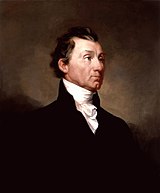
James Monroe, born on April 28, 1758, in Westmoreland County, Virginia, served as the 5th President of the United States from March 4, 1817, to March 4, 1825. He was a member of the Democratic-Republican Party and held office for two terms, having won elections in 1816 and 1820. Monroe is perhaps best remembered for his foreign policy, particularly the Monroe Doctrine, which warned European nations against interfering in the Americas and aimed to keep the Western Hemisphere free from European colonization.
Before becoming president, Monroe had a distinguished career, including serving as the Governor of Virginia, U.S. Senator, Ambassador to France and the United Kingdom, and Secretary of State under President James Madison. Monroe’s presidency is often referred to as the “Era of Good Feelings” due to the relative political harmony and national pride during his time in office.
Monroe was assisted by Vice President Daniel D. Tompkins throughout both terms. He passed away on July 4, 1831, at the age of 73, making him one of the presidents who died on the same day as Thomas Jefferson and John Adams, two of his fellow Founding Fathers. Monroe’s legacy continues to be shaped by his leadership during the post-War of 1812 period and his role in shaping U.S. foreign policy.
Leave a Reply