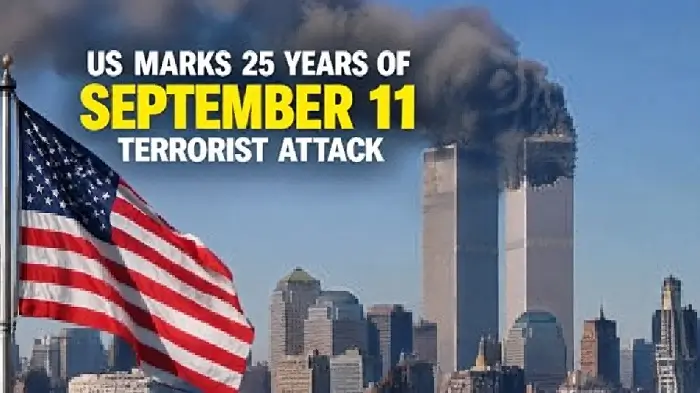
The United States is marking 25 years since the September 11, 2001 terrorist attacks that changed the country and reshaped global security. Nearly 3,000 people were killed after 19 al-Qaeda terrorists hijacked four commercial aircraft and carried out coordinated attacks in New York, Virginia and Pennsylvania.
How the September 11 Attack Happened
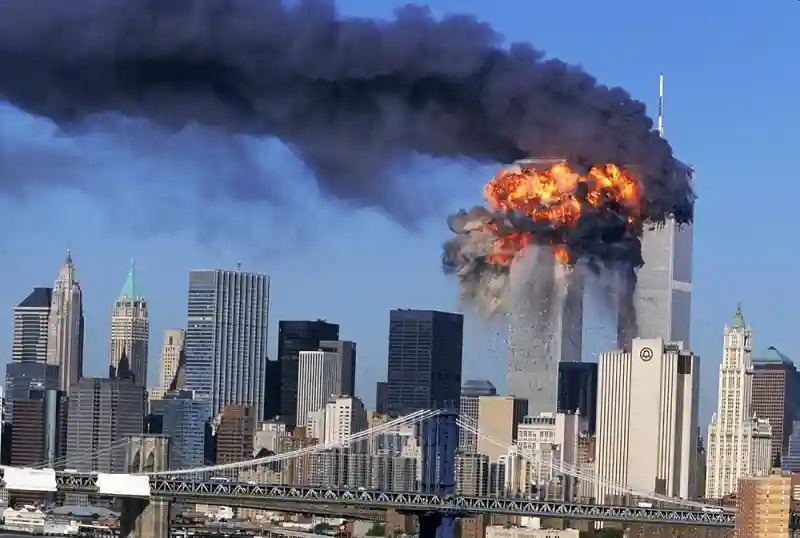
The attacks began shortly before 9:00am on September 11, 2001. American Airlines Flight 11 was flown into the North Tower of the World Trade Center in New York at 8:46am.
Seventeen minutes later, United Airlines Flight 175 struck the South Tower. Both towers were severely damaged and later collapsed.
At 9:37am, American Airlines Flight 77 was flown into the Pentagon in Arlington, Virginia. The headquarters of the US Department of Defense was badly damaged.
United Airlines Flight 93 was the fourth hijacked aircraft. Passengers and crew members attempted to regain control of the plane. It eventually crashed into a field near Shanksville, Pennsylvania.
A total of 2,977 people were killed in the attacks. Victims came from more than 90 countries.
The response was marked by extraordinary acts of courage. Firefighters, police officers, emergency workers and civilians rushed towards danger as thousands attempted to escape the burning buildings.
Damage and Long-Term Effects
The physical destruction was enormous. The Twin Towers were destroyed, while other buildings around the World Trade Center complex were also damaged. The Pentagon suffered a major impact and fire.
The human cost continued long after the attacks. Thousands of survivors and first responders were exposed to hazardous conditions during the rescue and recovery operations. Health problems linked to the attacks and their aftermath have continued to affect many people.
The economic and security consequences were also significant. Air travel was disrupted. Businesses were affected. Major changes were introduced across American aviation, intelligence, border security and emergency response systems.
The attacks also led to a major transformation of US foreign and security policy. The global campaign against terrorism became a central priority for successive American administrations.
United Nations Role After September 11
The United Nations responded quickly to the attacks. On 28 September 2001, the UN Security Council unanimously adopted Resolution 1373.
The resolution required countries to strengthen measures against terrorism. It addressed terrorist financing, international cooperation, border controls and the sharing of information.
A Counter-Terrorism Committee was also established to monitor implementation of the resolution across UN member states.
The international framework was later expanded. In 2006, the UN General Assembly adopted the Global Counter-Terrorism Strategy. It created a common framework covering prevention, counter-terrorism capacity, international cooperation, human rights and the rule of law.
In 2026, the UN conducted the ninth review of the strategy. The review has focused on changing terrorist threats and the need for stronger international cooperation.
How America Is Managing Terrorism Today
Twenty-five years later, the terrorist threat facing America has changed. Large-scale attacks directed from abroad remain a concern, but the threat has become more diverse.
The US Department of Homeland Security has identified domestic violent extremists, lone offenders and small groups among the significant threats facing the country. Foreign terrorist organisations and individuals inspired by their ideologies also remain security concerns.
The Department of Homeland Security was created in 2003, bringing together 22 federal agencies and offices. Its role has included preventing attacks, protecting critical infrastructure, improving intelligence coordination and strengthening emergency preparedness.
Greater attention is now being given to intelligence sharing, border security, aviation security, online radicalisation and terrorist financing. Emerging technologies are also being monitored because they can be used by terrorist networks to spread propaganda, recruit supporters and plan attacks.
The FBI and other security agencies have also adapted their methods. The emphasis has increasingly been placed on identifying threats before attacks can be carried out.
Twenty-five years after September 11, the United States continues to remember the 2,977 people who were killed while maintaining a security system designed to prevent another catastrophe. The anniversary remains a reminder of the devastating human cost of terrorism and the continuing need for international cooperation, effective intelligence and vigilance against evolving threats.
Leave a Reply