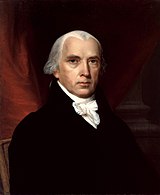
James Madison, born on March 16, 1751, in Port Conway, Virginia, is best known for being the 4th President of the United States, serving from March 4, 1809, to March 4, 1817. He is widely recognized as one of the Founding Fathers of the United States and a pivotal figure in the drafting of the U.S. Constitution. Madison was instrumental in shaping the early framework of the U.S. government and played a key role in the nation’s development during his presidency.
Before becoming president, Madison served in several important political positions, including as a delegate to the Continental Congress and as a member of the U.S. House of Representatives. He was also a key architect of the U.S. Constitution and the Bill of Rights, earning him the title “Father of the Constitution.”
Madison was first elected president in 1808 under the Democratic-Republican Party, defeating Charles C. Pinckney. He was re-elected for a second term in 1812, facing opposition from the Federalist Party and the ongoing tensions with Great Britain, which led to the War of 1812. His presidency was marked by significant challenges, including the outbreak of this war, which was a response to British restrictions on American trade and the impressment of American sailors.
During his two terms, Madison was assisted by two vice presidents: George Clinton (1809-1812) and Elbridge Gerry (1813-1814), although there were vacant periods during his presidency when the vice presidency was unfilled.
Madison’s leadership through the War of 1812, despite its setbacks, helped foster a sense of American nationalism and pride. After his presidency, Madison retired to his estate at Montpelier, Virginia, where he continued to be active in public affairs.
James Madison passed away on June 28, 1836, at the age of 85. His legacy remains influential, particularly in the areas of constitutional law, government structure, and the principles of federalism that continue to guide the United States today.
Leave a Reply