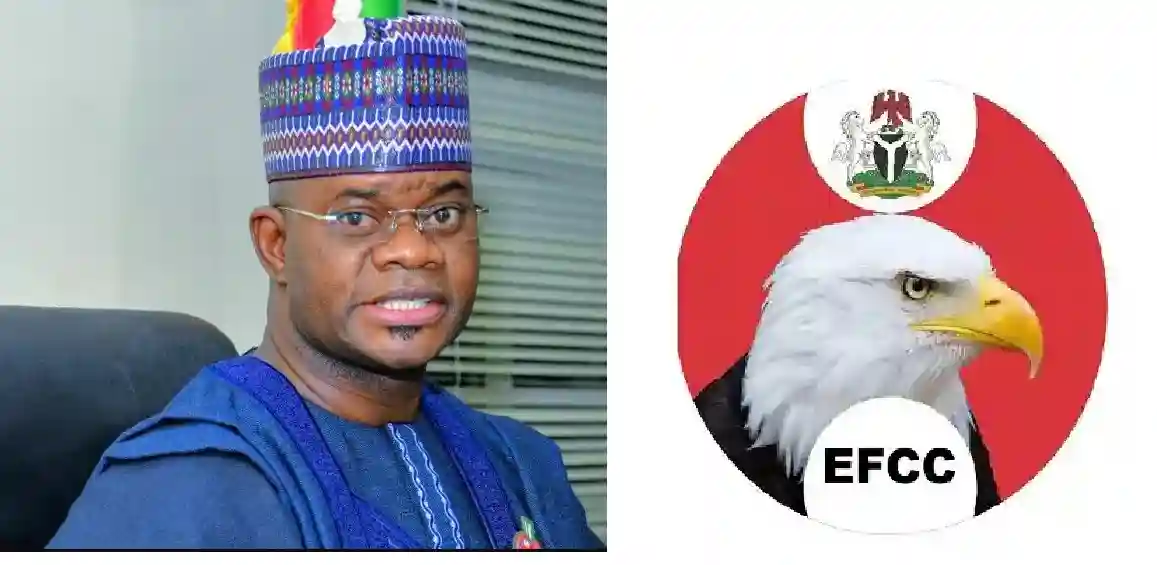
The ongoing saga surrounding Yahaya Bello, the former governor of Kogi State, continues to raise eyebrows and provoke conversations in Nigeria.
Recently, Bayo Onanuga, the Special Adviser to President Bola Tinubu on Information and Strategy, provided vital insights into the reasons behind the Economic and Financial Crimes Commission’s (EFCC) challenges in apprehending Bello, who is wanted for alleged financial crimes amounting to a staggering N80.2 billion.
Since the EFCC declared Bello wanted in April, there has been mounting pressure for his arrest. The agency’s efforts have seen them repeatedly visiting Bello’s residence in Abuja, but success has eluded them thus far. Alarmingly, it seems that instead of facing legal consequences, Bello has received protection from his successor, Usman Ododo, who has reportedly facilitated his evasion of the law.
One of the most pressing questions is why the police haven’t intervened, especially when it seems that Bello is effectively hiding beneath the immunity granted to Ododo as the current governor. During a recent interview with Channels, Onanuga laid out the intricacies involved, clarifying that the situation is not as simple as it might appear.
He explained, “The EFCC is an agency of the Federal Government, and it wants to arrest Yahaya Bello. Yahaya Bello is hiding under the agbada (flowing robe) of the governor of Kogi State, who happens to enjoy immunity.” This immunity complicates any attempts to arrest Bello while he remains on Ododo’s premises.
Drawing parallels to similar situations in international law, Onanuga likened Bello’s scenario to that of individuals seeking refuge in diplomatic spaces, citing the case of Julian Assange, the founder of WikiLeaks, who found shelter in the Ecuadorian embassy in London. In both instances, the protecting party benefits from legal privileges that hinder law enforcement from taking decisive action.
This situation raises significant questions about accountability and the effectiveness of Nigeria’s anti-corruption efforts. For many, it highlights the intricate balance between the rule of law and political protection, where individuals may evade accountability due to their ties to powerful political figures.
As the EFCC grapples with this “complicated” case, Nigerians are left wondering what implications this will have for the fight against corruption in the country. Will the legal system find a way to navigate these complexities? Or will political immunity continue to shield those accused of grave financial misconduct?
The unfolding developments are certainly worth monitoring, as they will have long-lasting effects on the efficacy of anti-graft initiatives and public trust in Nigeria’s political institutions. The stakes are high, and many are eager to see justice prevail, irrespective of political ties.
Leave a Reply