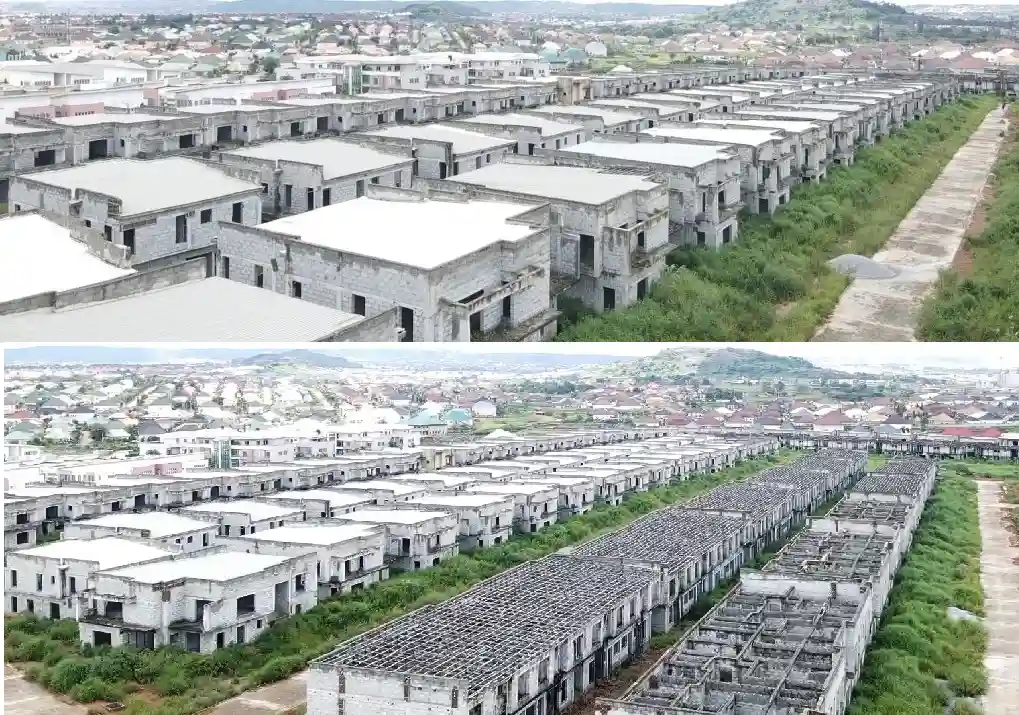
On Monday, December 2, 2024, Justice Jude Onwuegbuzie delivered a landmark ruling in the case of a significant asset recovery by the Economic and Financial Crimes Commission (EFCC). The ruling, a final forfeiture order, saw the seizure of an estate in Abuja covering an area of 150,500 square meters and containing 753 units of duplexes and other apartments. This estate, located on Plot 109 Cadastral Zone C09, Lokogoma District, is now the largest asset ever recovered by the EFCC since its establishment in 2003.
The ruling followed the legal proceedings initiated by the EFCC under its mandate to ensure that individuals involved in corrupt and fraudulent activities are deprived of the proceeds of their crimes. The property, originally developed by a former senior government official, was suspected of having been acquired with proceeds from unlawful activities. The forfeiture was secured through the application of Section 17 of the Advance Fee Fraud and Other Fraud-Related Offences Act No. 14, 2006, as well as Section 44 (2) B of the Constitution of the Federal Republic of Nigeria.
In his decision, Justice Onwuegbuzie ruled that the respondent failed to provide a legitimate justification for retaining the property, emphasizing that the estate had been reasonably suspected of being acquired with ill-gotten gains. As a result, the estate was permanently forfeited to the federal government.
The journey to the final forfeiture began with an interim forfeiture order granted by the same judge on November 1, 2024. The EFCC is continuing its investigation into the former government official involved in the fraudulent development of the estate, further highlighting the Commission’s commitment to targeting the proceeds of crime through asset forfeiture.
The legal basis for this asset recovery is enshrined in Part 2, Section 7 of the EFCC Establishment Act, which empowers the Commission to investigate individuals, corporate bodies, or organizations suspected of economic and financial crimes. This provision allows the EFCC to scrutinize the lifestyle and properties of individuals whose wealth cannot be justified by legitimate sources of income, thus enabling the Commission to trace and seize illicit assets.
EFCC’s Executive Chairman, Mr. Ola Olukoyede, has underscored the central role of asset recovery in the fight against corruption and financial crimes. In a recent statement to the House of Representatives Committee on Anti-corruption, Mr. Olukoyede described asset tracing and recovery as critical tools in weakening corrupt individuals by depriving them of the proceeds of their crimes. He emphasized that the EFCC’s approach has evolved to initiate asset tracing simultaneously with investigations, significantly improving the Commission’s ability to recover stolen wealth and disrupt criminal activities.
The forfeiture of this massive estate represents a milestone in the EFCC’s ongoing efforts to tackle corruption and ensure that illicit gains are not allowed to benefit individuals engaged in economic crimes.
Leave a Reply