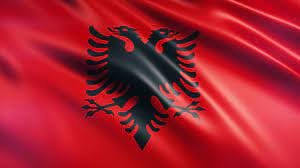
Albania is located in Southeastern Europe on the Balkan Peninsula and has a rich and complex history that has shaped its politics. Despite its relatively small size and population, Albania’s historical struggles and its transition to democracy make it a fascinating subject of study.
Historical Overview
Albania’s history stretches back to ancient times, with the Illyrians being among the earliest inhabitants. The region was later influenced by Greek, Roman, Byzantine, and Ottoman empires. Under Ottoman rule from the 15th century until the early 20th century, Albania remained largely under the control of the Turks, with a significant portion of its population converting to Islam.
Albania declared its independence from the Ottoman Empire in 1912, but the early years of independence were marked by political instability and territorial disputes. The country underwent various forms of governance, including a brief monarchy, before becoming a communist state in 1946 under Enver Hoxha.
Communist Era and Isolation
Hoxha’s regime, which lasted until his death in 1985, was one of the most rigid and isolated in Europe. Albania pursued an extreme form of Stalinism, cutting off virtually all foreign relations and instituting a highly centralized economy. The regime was marked by repression, forced labour, and the construction of thousands of bunkers across the country in preparation for an expected invasion that never came.
Transition to Democracy
Following the fall of the Soviet Union and the collapse of communism in Eastern Europe, Albania underwent significant political and economic changes. In 1991, Albania held its first multi-party elections, marking the beginning of its transition to democracy. However, the country faced severe challenges, including hyperinflation, widespread corruption, and civil unrest.
Modern Politics
Today, Albania is a parliamentary republic, with a political system based on the Constitution of 1998. The President, elected by the Assembly, holds a largely ceremonial role, while executive power is vested in the Prime Minister. The political scene is dominated by two major parties: the Socialist Party (PS) and the Democratic Party (PD), which have alternated in power over the years.
Albania has made significant strides in recent decades, especially in the areas of infrastructure development, human rights, and EU integration. It has been a candidate for European Union membership since 2014 and continues to pursue reforms to meet the criteria for full membership.
However, challenges remain, including political polarization, corruption, and the need for further economic development. Albania’s relationship with its neighbours, particularly Greece and Kosovo, remains important in shaping its foreign policy.
Albania’s political history reflects a country that has struggled through foreign domination, harsh regimes, and economic difficulties but is now embracing modernization and integration with Europe.
Leave a Reply