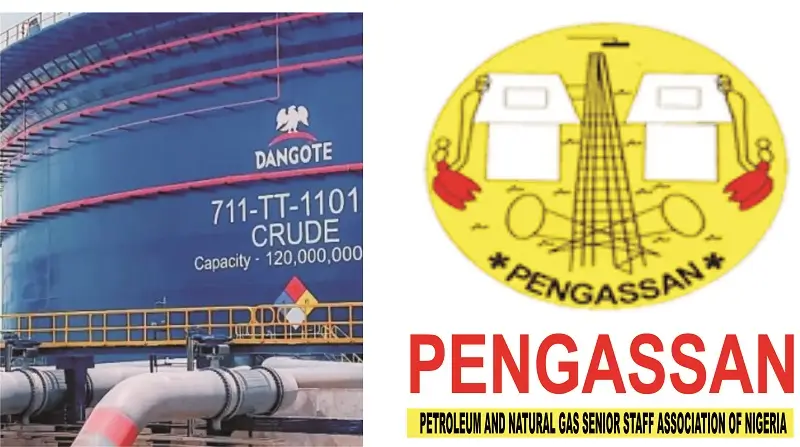
The Petroleum and Natural Gas Senior Staff Association of Nigeria (PENGASSAN) has officially declared a nationwide strike, set to commence at 12:01 AM on Monday, September 29, 2025.
In a circular released to its members, the union instructed all personnel across oil and gas offices, companies, institutions, and agencies to cease all services effective immediately at the stated time. This drastic measure follows a deepening crisis between PENGASSAN and Dangote Petroleum Refinery and Petrochemicals over mass layoffs and alleged anti-labour practices.
At the heart of the dispute is the alleged retrenchment of over 800 Nigerian workers by the Dangote Refinery, many of whom reportedly joined the union just prior to their dismissal.
PENGASSAN accuses the company of deliberately targeting its members, replacing them with foreign nationals, primarily Indian workers. The union views the move as a clear violation of Nigerian labour laws and international standards, emphasizing that the company acted unlawfully by terminating workers for exercising their right to unionize.
Dangote Refinery has, however, denied these allegations, stating that the layoffs were part of a strategic restructuring aimed at improving plant safety, efficiency, and productivity. According to the company, a minimal number of workers were affected and over 3,000 Nigerian employees remain actively engaged. It also blamed internal sabotage incidents for necessitating the staffing overhaul and dismissed accusations of anti-labour practices as “misinformation.”
Tensions escalated earlier this week when PENGASSAN ordered an immediate halt to all crude and gas deliveries to the Dangote Refinery. The union also directed its members to block any vessel loading operations related to the refinery’s operations. This move significantly impacts operations at the $20 billion refinery, which only recently began test operations but is already dealing with supply chain disruptions. In response to these issues, Dangote had already suspended the sale of petrol in naira, citing crude supply constraints and rising foreign exchange pressures.
The fallout from this crisis could be severe. A prolonged disruption in refinery operations may result in fuel scarcity, potential increases in petrol prices, and broader economic consequences, including inflation and supply chain interruptions across Nigeria. The situation has also raised alarm over the fragile relationship between major industrial employers and organised labour in the country, with growing concerns about workers’ rights and union recognition in the private sector.
Government agencies, including the Ministry of Labour, are now under pressure to intervene and mediate a resolution. The union is demanding the reinstatement of all sacked workers and full recognition of its organisational rights. Previous mediation efforts between NUPENG (a sister union) and Dangote earlier in the month ended in a temporary truce, but failed to prevent the latest fallout with PENGASSAN.
As the strike goes into effect, Nigeria faces a potential turning point in both its labour relations and energy sector operations. All eyes will be on whether PENGASSAN’s actions trigger broader union solidarity, or if government or legal intervention can bring both parties back to the negotiation table before the crisis deepens.
Leave a Reply