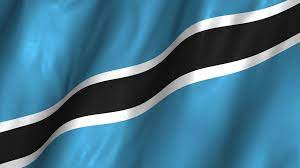
Botswana is a landlocked country in Southern Africa widely regarded for its political stability, steady economic management, and long-standing democratic tradition. Since gaining independence in the mid-20th century, Botswana has transformed from one of the poorest territories in the world into a middle-income country with relatively high standards of governance.
Its development path has been shaped by prudent leadership, responsible use of natural resources, and a strong commitment to education and institutional continuity. Despite ongoing challenges such as economic diversification and unemployment, Botswana remains a notable example of sustained national stability in Africa.
History
The territory now known as Botswana was historically inhabited by various Tswana-speaking communities who organized themselves into chiefdoms with well-defined social and political structures. These communities practiced agriculture, cattle rearing, and regional trade long before European contact. In the late 19th century, increasing pressure from European settlers and regional conflicts led local leaders to seek British protection. In 1885, the area became the British Protectorate of Bechuanaland.
Unlike many other colonies, Bechuanaland experienced limited direct British administrative control and economic exploitation. The colonial government invested minimally in infrastructure and development, leaving traditional institutions largely intact. While this resulted in limited economic growth during the colonial era, it also preserved local leadership systems that later played a crucial role in national governance. By the mid-20th century, nationalist movements emerged, advocating for self-rule and political autonomy, setting the stage for independence.
Independence
Botswana achieved independence from British rule on 30 September 1966, becoming a sovereign republic with Seretse Khama as its first president. At independence, the country faced severe developmental challenges, including widespread poverty, limited infrastructure, and heavy dependence on agriculture and external aid. However, early leadership adopted policies centered on national unity, democratic governance, and fiscal discipline.
The discovery of diamonds shortly after independence proved to be a turning point. Rather than allowing resource wealth to fuel instability, Botswana entered into structured partnerships that ensured state participation and revenue control. These funds were invested in infrastructure, healthcare, and education, laying a strong foundation for long-term growth. Botswana’s smooth transition to independence and its avoidance of post-colonial conflict distinguished it from many newly independent states of the period.
Natural Resources
Botswana’s economy has been significantly shaped by its natural resources, particularly diamonds, which remain the backbone of national revenue and exports. The country is among the world’s leading diamond producers by value. In addition to diamonds, Botswana has deposits of coal, copper, nickel, and soda ash.
Cattle farming is another important resource-based activity, contributing to rural livelihoods and export earnings. The country also has significant wildlife resources, with tourism centered on conservation areas such as the Okavango Delta. Botswana has pursued a conservation-focused tourism model that emphasizes sustainability and high-value tourism, helping to protect ecosystems while generating income.
Despite its success, reliance on diamonds presents risks, and the government continues to prioritize economic diversification into sectors such as manufacturing, financial services, and renewable energy.
Education
Education has been a central pillar of Botswana’s development strategy since independence. The government introduced policies to expand access to primary and secondary education, leading to high enrollment rates and significant improvements in literacy. Education is publicly funded, with a strong emphasis on equity and national coverage, including rural and remote areas.
At the tertiary level, Botswana has invested in universities and technical institutions aimed at building skilled human capital. Programs focus on science, technology, health, and public administration to support national development goals. While challenges remain in aligning education outcomes with labor market demands, continued reforms seek to enhance quality, relevance, and innovation within the education system.
System of Government
Botswana operates as a democratic republic with a multi-party political system. The president serves as both head of state and head of government and is elected through parliamentary processes. Legislative authority is vested in a National Assembly, whose members are elected through regular, competitive elections.
The country also maintains the Ntlo ya Dikgosi, a traditional advisory body that represents customary leadership and provides input on matters affecting tribal and cultural affairs. This integration of modern democratic institutions with traditional structures has contributed to social cohesion and policy continuity.
The judiciary is independent and plays a key role in upholding the rule of law. Regular elections, respect for constitutional limits, and peaceful transitions of power have reinforced Botswana’s reputation as one of Africa’s most stable and transparent democracies.
Leave a Reply