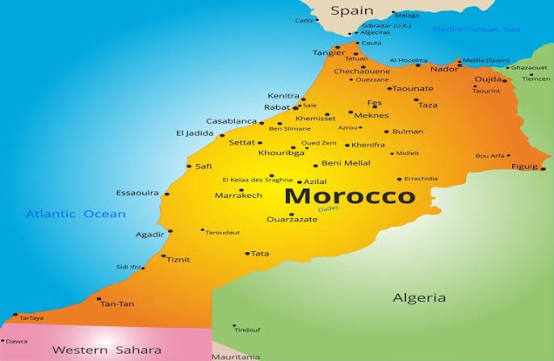
Morocco continues to be recognised as one of North Africa’s most influential nations, with a stable political system, a diversified economy and growing regional importance. The country’s progress has been driven by reforms across governance, finance, infrastructure and public services. Its Economy has been strengthened through industrial expansion, while Education, Health and technology have been improved through continuous public investment. Morocco Currency remains central to domestic and international trade, and Sports continues to promote national unity and global recognition.
Government Structure and National Administration
Morocco operates as a constitutional monarchy where executive authority is exercised by the King alongside an elected government led by the Prime Minister. Legislative powers are shared with a bicameral parliament, while judicial independence has been strengthened through constitutional reforms.
The following ministries are among the major government institutions:
- Ministry of Interior
- Ministry of Foreign Affairs
- Ministry of Economy and Finance
- Ministry of Justice
- Ministry of National Education
- Ministry of Health and Social Protection
- Ministry of Agriculture
- Ministry of Industry and Trade
- Ministry of Transport and Logistics
- Ministry of Energy Transition and Sustainable Development
- Ministry of Tourism
- Ministry of Youth, Culture and Communication
- Ministry of Digital Transition
Significant reforms have been implemented to improve public administration. Morocco Economy has benefited from sound governance, while Education has expanded through improved school access. Morocco Health services have also been strengthened, and Morocco technology initiatives have accelerated digital transformation across government institutions.
Banking Sector and Financial System
The banking industry has been regarded as one of the strongest in Africa. It is supervised by Bank Al-Maghrib, the country’s central bank, which regulates monetary policy and financial stability.
Major banks include:
- Attijariwafa Bank
- Banque Populaire
- Bank of Africa
- Crédit du Maroc
- CIH Bank
The official Morocco Currency is the Moroccan Dirham (MAD). Morocco Currency has remained an essential component of domestic commerce, foreign investment and tourism. The stability of Morocco Currency has supported business confidence and international trade. Financial inclusion has also been expanded through digital banking services, making Morocco technology an important driver of modern financial services.
Economy, Trade and Industrial Growth
Morocco Economy has become one of the largest and most diversified in Africa. Manufacturing, agriculture, tourism, renewable energy and automotive production have all contributed significantly to national income. Its Economy has also attracted foreign direct investment due to favourable business policies and strategic geographic positioning. Continued infrastructure development has enabled Economy to strengthen trade with Europe, the Middle East and the rest of Africa.
Phosphate mining remains one of the country’s greatest economic strengths, as Morocco possesses some of the world’s largest phosphate reserves. Other mineral resources include:
- Lead
- Zinc
- Silver
- Copper
- Cobalt
- Iron ore
- Manganese
- Salt
Investment in Morocco technology has enhanced industrial productivity, while Morocco Education continues to develop skilled professionals required for economic growth.
Geography, Climate and National Resources
Morocco is located in the north-western part of Africa, bordered by the Atlantic Ocean, the Mediterranean Sea, Algeria and Western Sahara. Its strategic location has made it a gateway between Europe and Africa.
The country’s geography includes:
- The Atlas Mountains
- Fertile agricultural plains
- Coastal regions
- Desert landscapes extending into the Sahara
The climate varies across different regions. Mediterranean conditions are experienced in the north, while Atlantic coastal areas enjoy moderate temperatures. Inland regions experience hotter summers, whereas mountainous areas receive snowfall during winter.
Environmental conservation programmes have been introduced to protect natural resources. Morocco Health has also benefited from improved environmental policies aimed at ensuring safer water supplies and better sanitation systems. Sustainable innovation continues to expand through Morocco technology projects focused on renewable energy.
Sports, Education and National Development
Morocco Sports has achieved international recognition through football, athletics, boxing and other sporting disciplines. Sports has received increased investment in stadiums, youth development and sports academies. International competitions have further elevated the profile of Sports on the global stage.
Meanwhile, Morocco Education has continued to modernise through curriculum reforms, university expansion and digital learning platforms. Public healthcare has equally advanced as Morocco Health programmes have improved hospital services, disease prevention and healthcare accessibility. Continued investment in Morocco technology has supported innovation, digital infrastructure and research, while Morocco Currency remains an important pillar of financial stability.
Together, Morocco Economy, Education, Health, technology, Currency and Morocco Sports continue to shape long-term national development and strengthen the country’s position across Africa.
Leave a Reply