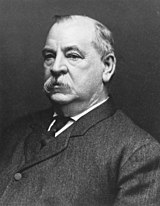
Grover Cleveland was the only president in American history to serve two non-consecutive terms. His political career was shaped by reform, fiscal restraint and opposition to corruption. Grover Cleveland rose from local politics to the highest office in the United States. His presidency was marked by economic disputes and major political changes. At the White House, he became known for his firm approach to government. His record remains important in understanding the development of the US presidency.
Grover Cleveland: Family & Education
Grover Cleveland was born on March 18, 1837, in Caldwell, New Jersey. He was the fifth of nine children born to Richard Falley Cleveland and Ann Neal Cleveland. His father was a Presbyterian minister.
Financial difficulties affected his early education. Grover Cleveland did not attend college. Instead, he received much of his education at home and through local schools. He later moved to New York, where he studied law while working in a law office.
He was admitted to the bar in 1859. His legal career helped prepare him for public service. His reputation for honesty was also developed during these early years.
Administration Period
Grover Cleveland became the 22nd US President in 1885. He served until 1889. He later returned as the 24th US President in 1893 and remained in office until 1897.
During his first administration, the White House was associated with civil service reform. He resisted political patronage and sought greater accountability in government. The United States was also experiencing rapid industrial growth.
His second administration was more difficult. The United States entered a severe economic depression in 1893. Bank failures increased. Unemployment rose. Public dissatisfaction became widespread.
At the White House, Cleveland supported policies designed to protect the gold standard. His approach created divisions within the Democratic Party.
Political Party
Grover Cleveland was a member of the Democratic Party. He became one of its leading reform figures during the late 19th century.
His political career had been built around opposition to corruption and excessive government spending. He was elected governor of New York before becoming president.
As a Democrat, he promoted limited government. He also opposed what he regarded as unnecessary federal intervention. His views sometimes placed him at odds with members of his own party.
The US President was especially critical of measures that he believed would weaken financial stability. The White House became a centre of intense debate over tariffs, currency and federal power.
His Predecessor and Successor in Office
Grover Cleveland succeeded Chester A. Arthur when he first entered the presidency in 1885. He was succeeded by Benjamin Harrison in 1889.
Cleveland later defeated Harrison in the 1892 election. He therefore returned to the White House in 1893. His return made him the only US President to serve two non-consecutive terms.
The unusual sequence made the United States presidential history especially distinctive. His political comeback remains one of the most notable events in the office’s history.
Achievements & Legacy
Grover Cleveland is remembered for his commitment to civil service reform. He supported merit-based appointments and challenged political patronage. He also used the presidential veto extensively.
His administration supported tariff reform. However, disagreements over economic policy remained intense. During his second term, his response to the Pullman Strike was controversial. Federal troops were sent to enforce federal authority.
Cleveland’s legacy is therefore mixed. Supporters viewed him as principled and fiscally conservative. Critics argued that some of his economic decisions placed too much pressure on workers and farmers.
The White House under Cleveland reflected a strong belief in presidential responsibility. The United States was changing rapidly during his years in office. Industrialisation, labour unrest and financial instability were reshaping national politics.
Grover Cleveland remains significant because his career demonstrated that a president could leave office and later return to power. His two administrations also showed how economic crises could redefine political leadership.
The US President’s influence extended beyond his own era. His reform agenda, fiscal policies and independent political style helped shape debates about executive power. At the White House, his decisions reflected the political tensions of a transforming United States.
Grover Cleveland’s presidency remains a notable chapter in American history. His two terms established a unique presidential record. His approach to reform, spending and federal authority continues to define discussions about his place among US leaders. The United States political system was permanently marked by his unconventional return to the White House, while his legacy continues to attract historical attention.
Leave a Reply