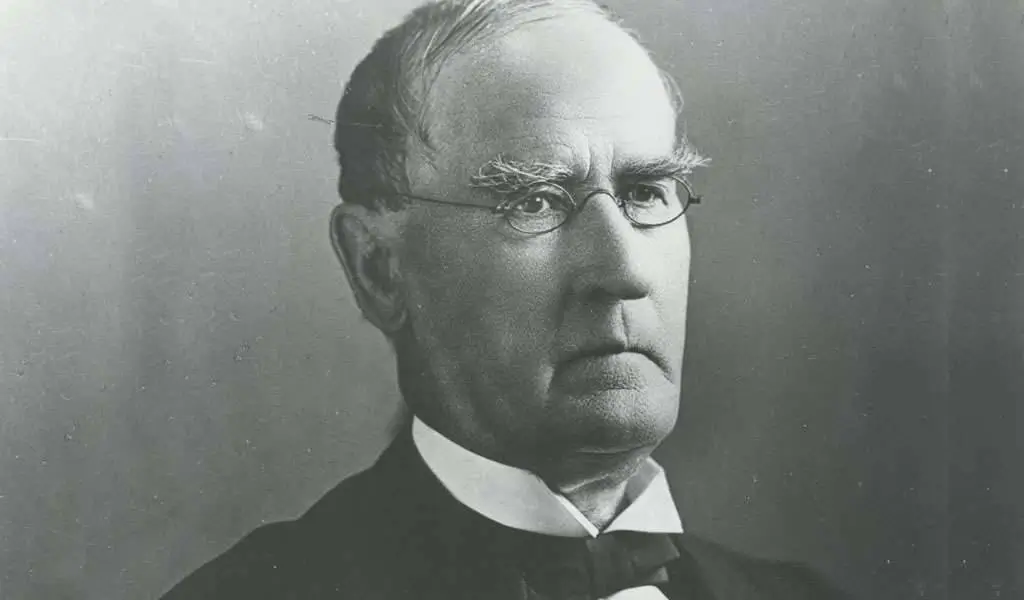
William McKinley shaped the presidency during a period of rapid economic growth, overseas expansion and political change. His administration led the United States of America into the Spanish-American War and oversaw a new role for the country on the world stage. From his family background and education to his career and successor in office, his record remains important in American presidential history.
William McKinley: Family and Education
He was born on 29 January 1843 in Niles, Ohio. He was the seventh child of his father and Nancy Allison McKinley. His family valued education, discipline and public service.
He attended local schools before studying at Allegheny College in Pennsylvania. His education was interrupted by illness and financial difficulties. He later taught school and studied law. These experiences helped develop the practical outlook that marked his public career.
Administration and Political Priorities
The 25th US President took office in 1897. His administration focused strongly on economic recovery. The country had suffered through the Panic of 1893. He supported protective tariffs. The Dingley Tariff was enacted in 1897 and raised duties on imported goods.
The White House also became closely associated with the administration’s foreign policy. During the Spanish-American War in 1898, the United States of America defeated Spain and gained control over several overseas territories. The conflict increased the country’s international influence.
Career Before the Presidency
Before entering the White House, William McKinley developed a long political career. He served in the Union Army during the American Civil War and reached the rank of brevet major. He later practised law in Canton, Ohio.
His political career included service in the US House of Representatives. He also became governor of Ohio. These positions strengthened his reputation as a disciplined Republican leader.
As US President, he promoted business confidence and economic expansion. The White House was also used to manage growing debates over imperialism, trade and America’s international responsibilities. His presidency showed how the United States of America was becoming more active beyond its borders.
War, Expansion and a Changing Nation
The Spanish-American War transformed William McKinley’s presidency. Fighting began in 1898 after rising tensions between the United States and Spain. American forces quickly achieved major victories.
The war ended with the Treaty of Paris. Spain surrendered control of Puerto Rico and Guam and transferred the Philippines to the United States. Cuba gained independence after the conflict, although American influence remained significant.
The expansion created fierce debate. Some Americans supported overseas territories as evidence of national strength. Others opposed imperialism. The administration defended its decisions as part of a changing international role.
The United States of America was moving towards a prominent position in global affairs. Economic growth, military success and overseas expansion changed how the nation was viewed abroad.
Successor in Office and Lasting Impact
William McKinley won re-election in 1900. As US President, his term began with economic confidence and international influence. However, his presidency was cut short.
In September 1901, he was shot by Leon Czolgosz at the Pan-American Exposition in Buffalo, New York. He died on 14 September 1901. Vice President Theodore Roosevelt then became US President and inherited a country entering a new political phase.
The White House passed into a new era under Roosevelt. His presidency soon became associated with progressive reform, stronger federal regulation and an assertive foreign policy.
His presidency remains significant because it connected domestic economic recovery with overseas expansion. It also strengthened executive leadership, reshaped foreign policy and intensified arguments about America’s responsibilities abroad during a period of rapid national transformation nationwide. The United States of America, under his leadership, entered the 20th century with greater global influence. The White House had become a centre of decisions affecting both domestic prosperity and international affairs. As US President, he helped define a turning point in national history, while his successor in office carried the presidency into a new political age.
Leave a Reply