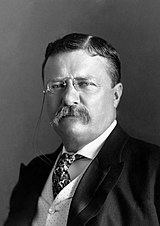
Theodore Roosevelt was the 26th US President and one of the most influential figures in the history of the United States of America. He became President in 1901 after the assassination of William McKinley. At the White House, Theodore Roosevelt promoted progressive reforms, challenged powerful corporations, and expanded America’s role in world affairs. His energetic leadership gave the presidency a stronger public profile and left a lasting mark on the United States of America.
Theodore Roosevelt: Family and Education
Theodore Roosevelt was born on 27 October 1858 in New York City. He came from a wealthy and socially prominent family. His father, Theodore Roosevelt Sr., was a businessman and philanthropist. His mother was Martha Bulloch Roosevelt.
Roosevelt was educated at home during his early years. He later attended Harvard College and graduated in 1880. He studied history, philosophy, and other subjects. His education encouraged his interest in public affairs. He also developed a strong interest in natural history and outdoor life. These interests remained important throughout his career.
Administration
The administration of Theodore Roosevelt was shaped by progressive reform. As US President, he believed that federal power should be used to protect the public interest. He became known as a trust-buster for challenging large corporations that were considered harmful to competition.
The White House also supported stronger federal regulation of the railways and major industries. Roosevelt backed the Pure Food and Drug Act and the Meat Inspection Act of 1906. These measures increased government oversight of food production and consumer safety.
The US President also promoted conservation. More than 200 million acres of public land were placed under federal protection during his presidency. National forests, wildlife refuges, and national monuments were expanded. The United States of America therefore saw major changes in both economic regulation and environmental conservation.
Political Career
Before becoming US President, Roosevelt had already built a varied political career. He served in the New York State Assembly. He later became president of the New York City Police Commission. He also served as Assistant Secretary of the Navy.
Roosevelt became Governor of New York in 1899. His reputation for reform continued to grow. In 1900, he was selected as William McKinley’s running mate. Their ticket won the presidential election.
After McKinley was assassinated in September 1901, Roosevelt became US President. He was only 42 years old. He remains the youngest person to assume the presidency.
At the White House, Roosevelt developed a highly active public leadership style. He used speeches and newspapers to communicate directly with citizens. His approach increased the visibility of the presidency. The United States of America was also projected more confidently on the international stage.
Predecessor & Successor
William McKinley was the immediate predecessor of Theodore Roosevelt. McKinley had served as the 25th US President from 1897 until his assassination in 1901. His administration had overseen the Spanish-American War and the growth of American influence overseas.
Roosevelt continued some of McKinley’s foreign policy direction but adopted a more assertive approach. His famous belief in speaking softly while carrying a big stick became associated with American diplomacy.
The White House under Roosevelt supported the construction of the Panama Canal. The project strengthened America’s strategic and commercial position. Roosevelt also played a significant role in negotiating an end to the Russo-Japanese War. His diplomatic efforts earned him the Nobel Peace Prize in 1906.
Roosevelt left office in 1909. William Howard Taft succeeded him as US President. Although Roosevelt initially supported Taft, the two later became political rivals. Roosevelt returned to politics in 1912 as the Progressive Party candidate.
Theodore Roosevelt remains a defining figure in the political history of the United States of America. His presidency expanded the role of the federal government and strengthened the influence of the White House. His reforms demonstrated that the US President could confront powerful business interests while promoting conservation and public welfare. The career of Theodore Roosevelt also showed how energetic leadership could reshape national priorities. His legacy continues to influence debates about presidential power, corporate regulation, conservation, and America’s place in the world.
Leave a Reply