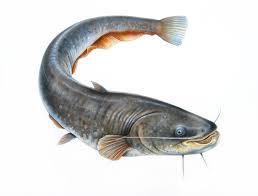
The production of catfish in Nigeria is a multi-national business opportunity that gives annual production in millions. It involves the nurturing of the fry for three or four weeks within which they could grow into post fingerlings, mini juveniles and juveniles respectively. These can be nurtured for four to five month into grow-out or table size fish suitable for sale and consumption.
Going in catfish farming involves the following:
Step one: planning for Fish Farming Business Plan in Nigeria, a vital step.
Here, one has to determine whether one wants to go into a big or small-scale commercial venture, secondly, the pond system to adopt, Re-circulatory system, earthen pond or concrete/plastic pond or both.
Step two: land, a very critical aspect of your fish farming business plan in Nigeria
This is very important. One has to acquire at least full plot of land in a suitable location. This means, you must consider good access road, closeness to market and labour. If the land is already available, it is good.
Then we apportion it as follows:
1. Location of ponds
2. Location of farm house.
3. Location of water supply
4. Location of drainage facility. (The last point is very important, as you don’t drain your water to constitute
Step Three: Water supply Source in your Fish Farming Business Plan In Nigeria
The best water for fish farming is from bore hole. One or two must be sunk to guarantee steady water supply. Overhead tanks for holding water should also be installed. The mechanism of pumping of water must be backed up. The system must not fail.
Step Four: Pond Construction aspect of Fish Farming Business Plan in Nigeria.
It is advisable to engage the service of a consultant. The success or failure of this project depends largely on construction of standard ponds that can stand the test of time. Common causes or failure in catfish farming include over stocking, poor quality feeds, water pollution and bad specie of catfish fingerlings.
Here are details of catfish farming
1. They can be easily farmed at the family backyard.
2. Cost of medication is very negligible in fish farming and it is a good poverty alleviation activity to stem rural-urban migration.
3. Rearing of fish for local consumption will decrease importation of frozen fish chicken and turkey into the country and producing fish for export will greatly enhance our economic potential. It will firm up the naira, improve the GDP, reduce inflation and create more jobs for Nigerians. Over a million jobs can be created in the fish industry alone.
The Concept of Commercial Fish Production
The objective of commercial fish farming is to produce fish to supply markets at a competitive price and make a profit. The market is therefore, the driving force for commercial fish farming. The key parameters that determine the levels of production and success in fish farming are water quality, feed quality and seed quality. How one manages these parameters vis-à-vis the prevailing market demand and prices determines the viability of a commercial fish farm.
Sustainable Aquaculture Production Business in Nigeria
The catfish production technology discussed in this manual is feed based and built upon the principles of sustainable aquaculture. Sustainable aquaculture as applied in this technology package is ‘an adaptable aquaculture production technology system whose ecological and economic viability persists indefinitely’. Fish are greatly affected by the environment in which they are grown. An aquatic ecosystem is extremely dynamic, changing with nutrient inputs, weather and season.
The effects of the changes are even more pronounced in artificial systems like fish farms where man influences what organisms and other inputs are added to the culture environment.
Fish growth and survival are closely related to water quality .Furthermore, fish are cold-blooded animals. All of their bodily functions are directly influenced by the temperature of the environment.
So, while the markets determine aquaculture opportunity, the ecological and economic principles determine the choices for sustainable aquaculture e practices and technology. Therefore, users of the manual are encouraged to understand the principles upon which this catfish farming production technology is based. This is because, the specific environment where the farm is located defines what additional opportunities and constraints in production one is likely to encounter.
Farmers are therefore encouraged to be observant and continue to make adaptations, in order to enhance the productivity and profitability of their specific enterprises.
Therefore, this “Fish Farming Business Plan in Nigeria” is a guide to the commercial production of catfish in Nigeria.
- Poor Farm Sitting: Such as in a place with inadequate water supply, poor soils for pond construction (e.g. may be rocky), far away from markets and/or supplies, etc.
- Poor farm and facility design: Ponds not compacted properly, leak a lot, may be too shallow, and consequently construction and maintenance costs become too high while optimum yields are not achieved, Poor accessibility to ponds, requiring workers to walk across difficult terrain to transfer fish from pond to vehicle or vice-versa.
- Poor Investment Plan: Several farmers assume that to be a commercial fish farmer one must have several large ponds. Hence, they construct many ponds at once, which constrain their cash flow. Because of this, some farmers take a while to start production or may only afford to start production in one pond after all the investment.
- Start production before knowing what management options are available or Start looking for the market for fish when the fish is ready for sale. Meanwhile, because they are still feeding, the pond attains its maximum loading and fish stop growing. The longer the fish stay in the pond after they have stopped growing, the smaller the profit margin.
- Do not employ the right people. Entrepreneurs use other peoples time, i.e. employ the right people. Hiring family members who have little or no desire to learn proper fish farming techniques is a liability because most people find it difficult to dismiss them even after it has become apparent that they are the reason for the poor performance of the fish farm.
- Irregular and improper feeding. This ranges from complete lack of knowledge about the nutritional requirements and feeding of catfish to attempts at saving money by using cheap feeds. Some farmers just do not feed their fish because they think fish will grow as long as they are in water. They do not realize that like all animals, best performance would be obtained if the fish have a balanced diet and that the feed needs to be palatable, easily digestible and does not disintegrate into the water before the fish can consume it.
- For the same reasons that the majority of poultry farmers would not think it wise to feed layers maize bran, a commercial fish farmer should not believe they can get the best production results by feeding catfish maize bran only. If one intends to increase production and profit margins from producing eggs, then it is well known that the best way would be to feed the layers with quality layers mash and not growers mash. Likewise, fish should be fed with the correct feed of the right quality.
- Do not appreciate that different management levels have different requirements which consequently affects stocking rates. As in cattle, for example, the management requirements and stocking rates for ranching are different from zero grazing because of the limits to which the animals reared under the different systems can get access to adequate feed to cater for their maintenance and production needs. The same applies in fish farming. Stocking rates are a function of the specific management regime.
- Being more impressed with harvesting the few large fish rather than looking at the overall picture and appreciating total tonnage at harvest. If you had a sow that ate all its piglets and grew nice and fat; would you be happy? Or would you rather have several but smaller animals of a reasonable size for sale rather than one giant? Survival rates and average fish size matter when raising table-fish, because profit margins above operational costs generally range between 30 to 40% depending on one’s market. The net income is therefore largely a function of turnover.
- Wrong objectives for investing in aquaculture. Some do it simply because their friends are doing it or because they are targeting ‘free’ funds from donors or government. Nothing in this world is free. Always watch out for the hidden costs before making a final decision.
Leave a Reply