Below is an expanded 12-paragraph version suitable for a community history, development advocacy article, or publication. I have retained the communities you supplied and added other Ughievwen communities commonly associated with the kingdom.
Ughievwen Kingdom and Its Communities
The Ughievwen Kingdom is one of the kingdoms that make up the wider Urhobo ethnic nationality in Delta State, Nigeria. It is located in Ughelli South Local Government Area of the state and has a rich cultural heritage, traditional institution and communal identity. The kingdom is headed by the Ovie, who is traditionally addressed as the Okobaro of Ughievwen Kingdom.
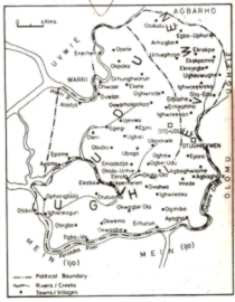
Otughievwen is regarded as the centre of the Ughievwen Kingdom. It occupies an important position in the traditional and cultural affairs of the kingdom. The community serves as a major reference point for the history, identity and traditional administration of the Ughievwen people.
The kingdom comprises numerous communities and towns spread across its traditional territory. Among them are Okwagbe Waterside, Okwagbe Inland, Oginibo, Imode, Eyara, Owahwa, Okwemor, Egbo-Ideh, Ophorigbala and Esaba. Other communities associated with the kingdom include Otu-Jeremi, Ekakpamre, Oviri-Olomu, Otor-Udu and neighbouring settlements within the wider Ughievwen area.
Okwagbe remains one of the notable communities in Ughievwen. It is broadly identified with both Okwagbe Waterside and Okwagbe Inland. The community has contributed significantly to the social and economic life of the kingdom. Its people have maintained strong communal bonds while participating in agriculture, commerce, public service and other economic activities.
Otu-Jeremi is another strategically important community in the kingdom. It has gained particular attention because of the oil and gas activities located within the area. The presence of major gas infrastructure has placed Ughievwen on the map of Nigeria’s energy-producing communities, although residents continue to demand greater visible development from the economic resources generated from their land.
The traditional institution remains central to the identity of the kingdom. The Ovie, known as the Okobaro of Ughievwen Kingdom, represents the traditional authority of the people. The institution provides continuity between the history of the ancestors and present generations while helping to preserve customs, traditions and communal values.
Development Challenges and the Way Forward
Despite the importance of Ughievwen communities and the natural resources located within the area, major infrastructure gaps remain a concern. Many residents have continued to express the need for better roads, healthcare facilities, educational institutions, electricity, water supply and other basic amenities. Development is expected to reach communities where natural resources are extracted and economic activities are carried out.
The presence of one of Africa’s major gas-processing facilities at Otu-Jeremi has also intensified calls for meaningful development. For many residents, the existence of significant oil and gas infrastructure has not translated sufficiently into visible improvements in their standard of living. The expectation is that host communities should experience tangible benefits through infrastructure, employment, human-capital development and sustainable economic opportunities.
One of the major demands is the establishment of tertiary institutions within Ughievwen land. A university, polytechnic, college of education or other higher institution would provide opportunities for young people to obtain quality education closer to home. It could also attract investment, create employment and stimulate the growth of surrounding communities.
Healthcare infrastructure is another pressing need. A modern, state-of-the-art hospital equipped with specialist departments, qualified medical personnel, diagnostic facilities and emergency services would significantly improve healthcare delivery. Such a facility could serve not only Ughievwen communities but also neighbouring areas of Ughelli South and other parts of Delta State.
A comprehensive road network is equally important for the development of the kingdom. Good roads would connect communities such as Okwagbe, Oginibo, Imode, Eyara, Owahwa, Okwemor, Egbo-Ideh, Ophorigbala, Esaba and Otu-Jeremi more effectively. Better transportation links would support agriculture, commerce, movement of people and access to schools and healthcare facilities.
There is also a strong case for major economic and recreational projects. A seaport or suitable maritime development could support trade and create new economic opportunities, while a modern stadium could promote sports and youth development. An airport or improved regional aviation facility, alongside industries and processing plants, could further strengthen the economic base of the area.
The development of industries should be given particular attention because natural resources alone cannot guarantee lasting prosperity. Investment in agro-processing, manufacturing, logistics, energy-related industries and small and medium-sized enterprises could create jobs for Ughievwen youths. Local businesses could also be supported through skills acquisition, access to finance and improved infrastructure.
Ughievwen Kingdom possesses significant human, cultural and natural resources. What is required is a coordinated development strategy involving the traditional institution, communities, government, private investors and other stakeholders. With sustained investment in education, healthcare, roads, industry and other critical infrastructure, the kingdom could experience substantial economic transformation.
The people of Ughievwen deserve development that is visible in their communities and capable of improving everyday life. The call is therefore for meaningful infrastructure, employment opportunities, quality education, modern healthcare and productive industries. Such development would help the people benefit more directly from the resources and economic activities taking place on their ancestral land and strengthen the broader development of Ughelli South and Delta State.
Leave a Reply