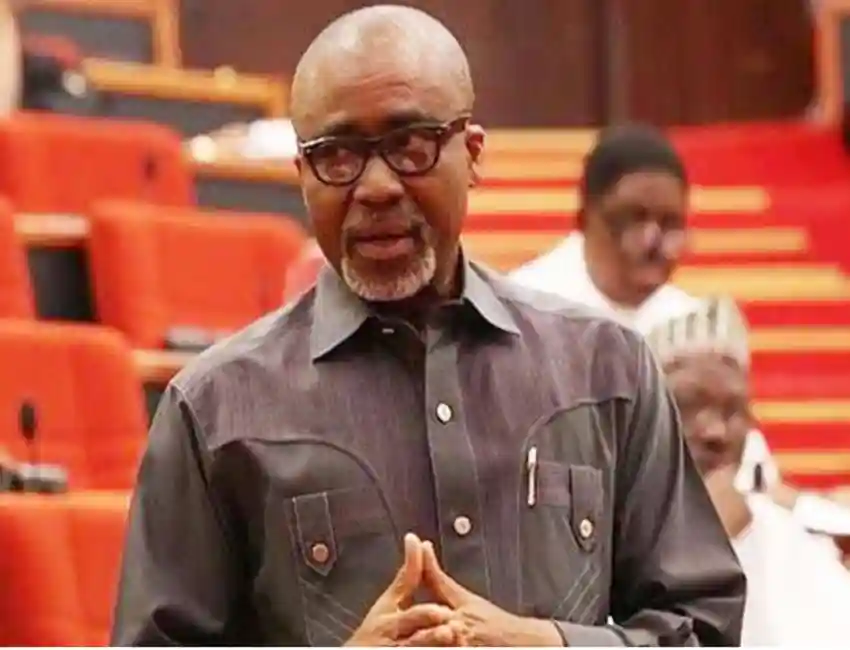
Senator Enyinnaya Abaribe, a prominent member of the opposition Peoples Democratic Party (PDP), has expressed his belief that Nigeria would have been in a better state if Peter Obi, the Labour Party’s candidate, had won the 2023 presidential election.
This bold assertion highlights Abaribe’s support for Obi and his growing concern over the trajectory of Nigeria under the current administration.
A Vision for Change
Senator Abaribe’s comment underscores a deep dissatisfaction with the current leadership and offers a glimpse into an alternate vision for Nigeria’s future. He posits that Obi’s rise to the presidency would have marked a significant departure from the status quo, one that could have led to transformative reforms and a rejuvenation of Nigeria’s institutions.
Abaribe’s endorsement of Obi reflects a broader sentiment among many Nigerians, particularly the youth and those disillusioned with the traditional political class, that a change of leadership could have been the key to solving the country’s numerous crises.
The State of Nigeria Under Current Leadership
Abaribe’s remark is framed within the context of Nigeria’s ongoing challenges, including a faltering economy, security concerns, corruption, and a lack of basic infrastructure in many parts of the country.
The country has seen increasing inflation rates, unemployment, and poverty, which have put significant pressure on the Nigerian population. Furthermore, the security situation has worsened, with insurgent groups, bandits, and kidnappers becoming more emboldened, while the government’s response remains inadequate.
Critics of the current administration, led by President Bola Ahmed Tinubu, argue that the promises made during the election campaigns have largely not materialized, leaving Nigerians struggling to meet their basic needs.
It is within this context that Abaribe suggests that Obi, with his track record as a governor and his reputation for fiscal discipline, would have offered a different approach.
The Promise of Peter Obi’s Presidency
Peter Obi, former governor of Anambra State, emerged as a formidable challenger in the 2023 presidential race, defying the expectations of many by rallying a significant portion of the electorate behind him.
His campaign, focused on competence, transparency, and youth empowerment, captured the imaginations of millions, particularly young Nigerians who felt disconnected from the traditional political establishment.
Abaribe’s support for Obi is grounded in the latter’s perceived ability to lead Nigeria on a path of sustainable development, economic recovery, and political reform. Obi’s economic track record as governor, where he was credited with improving Anambra State’s fiscal health, resonated with many voters. His focus on reducing wasteful spending, increasing state revenues, and prioritizing education and healthcare set him apart from other presidential candidates.
This pragmatic approach to governance was seen as a much-needed shift from the bloated, inefficient government structures that have characterized Nigeria’s political system for decades.Obi’s message of hope was also one of inclusive governance, aimed at addressing Nigeria’s ethnic and religious divides.
He called for a united country, where leadership would be based on merit rather than ethnicity or religion, a promise that resonated with Nigerians weary of the deepening divisions in the country.
Senator Abaribe’s statement is also a call for greater accountability in Nigerian politics. Abaribe has long been a vocal critic of political corruption and mismanagement, often speaking out against the failures of past and present administrations. By highlighting what could have been under Peter Obi’s leadership, Abaribe is challenging the current government to reflect on its promises and the realities on the ground.
Abaribe’s remarks bring attention to the increasing disenchantment among Nigerians with the political establishment. The growing support for figures like Peter Obi in the 2023 election demonstrated a desire for something different from the traditional political elites who have, for years, been accused of mismanaging the country’s vast resources and failing to address its most pressing issues.
The senator’s comments suggest that Obi’s administration might have been the catalyst for meaningful change, where competence, transparency, and economic reform were prioritized.
The Electoral Process and Its Implications
Abaribe’s statement also hints at the contentious nature of the 2023 elections, which were marred by allegations of electoral malpractice, including vote rigging, voter intimidation, and issues with the independence of the electoral commission. The presidential election results, which saw Bola Tinubu declared the winner, have been disputed by opposition parties, particularly the Labour Party and the Peoples Democratic Party (PDP). Obi’s supporters argue that he was the true winner of the election, and his campaign’s strong showing underscores the widespread desire for a break from the old political order.
Senator Abaribe’s comments raise questions about the integrity of the electoral process and whether the true will of the people was reflected in the outcome. While the courts upheld the victory of Bola Tinubu, many Nigerians, including Abaribe, remain unconvinced that the process was free, fair, and transparent. This uncertainty further fuels the belief that Peter Obi could have brought about the positive change the country desperately needs.
Senator Abaribe’s statement about Nigeria being better off under Peter Obi’s leadership serves as both a critique of the current administration and a call for political change. It reflects a growing realization that Nigeria’s problems are not just economic but structural, rooted in governance practices that have failed to address the needs of the people. While Abaribe’s comments may be seen as a political stance, they tap into a larger conversation about the future of the nation.
However, the desire for a new way of doing things, exemplified by Obi’s candidacy, highlights the deep yearning for effective leadership and systemic change in Nigeria.
Leave a Reply