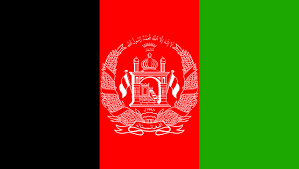
Afghanistan, located at the crossroads of Central Asia, South Asia, and the Middle East, has a long and varied history and politics. It has been home to ancient civilizations and was an important part of the Silk Road trade routes. Throughout history, it has seen the rise of many empires, such as the Persian, Greek, Mauryan, and Mughal empires.
In the 19th and 20th centuries, Afghanistan struggled with invasions, including the British during the Anglo-Afghan wars and the Soviet Union in the 1980s. The country experienced civil war in the 1990s, followed by the rise of the Taliban. More recently, it endured conflict involving U.S. and NATO forces, culminating in the Taliban’s return to power in 2021.
Form of Government
Afghanistan was previously a presidential republic, with a democratically elected president. However, after the Taliban regained control in 2021, the country transitioned to an Islamic Emirate. Under this system, the Taliban holds authority and governs through an interpretation of Islamic law (Sharia). Political power is centralized within the Taliban leadership, and the country’s legal and political structures are based on their version of Islamic principles, significantly different from the previous democratic framework.
Economy
Afghanistan’s economy is heavily dependent on agriculture, with key exports including fruits, nuts, and livestock. However, illegal activities, such as opium poppy cultivation, also play a significant role in the rural economy. The mining sector holds potential due to the country’s vast natural resources, including precious metals and minerals.
Afghanistan has faced economic challenges, including poverty, unemployment, and infrastructure deficits. In addition, foreign aid had been a significant source of funding before the Taliban’s return to power, after which international financial support has been cut off, exacerbating economic hardships.
Afghanistan’s Politics
Afghanistan’s political landscape has been unstable due to internal conflicts and external interventions. The former government, led by a president, faced challenges in maintaining unity and authority, particularly with the rise of the Taliban. Political power in the past was marked by efforts to establish a democratic system, but this was undermined by corruption, insurgencies, and ethnic divisions.
The Taliban’s return in 2021 ended the democratic experiment and reestablished a fundamentalist regime, effectively altering the political landscape. The Taliban’s approach to governance involves the implementation of strict Islamic law, with limited international recognition and ongoing challenges in securing stability and governance within the country.
Afghanistan’s future remains uncertain, and its political and economic recovery will depend on both internal reforms and international engagement.
Leave a Reply