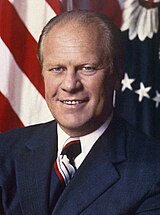
Gerald Ford remains one of the most respected political figures in American history. His rise to become US President was marked by unique constitutional circumstances rather than a national election. Stability was restored after a period of political uncertainty, and confidence in government was gradually rebuilt. Throughout his administration, important decisions were taken to address economic and political issues. His family background, education and public service have continued to attract interest across the United States. The leadership shown by Gerald Ford has often been studied as an example of duty, integrity and national service.
Gerald Ford Profile and Early Life
Gerald Ford was born as Leslie Lynch King Jr. on 14 July 1913 in Omaha, Nebraska, in the United States. After his parents separated, he was raised by his mother, Dorothy Ayer Gardner, who later married Gerald Rudolff Ford Sr. His stepfather provided a stable home, and his name was eventually adopted.
His parents played an important role in shaping his values. His mother was known for her resilience, while his stepfather encouraged discipline and hard work. A strong sense of responsibility was developed during his childhood.
Gerald Ford married Elizabeth Anne “Betty” Ford in 1948. Their marriage became one of the most admired political partnerships in the United States.
Their children are:
- Michael Gerald Ford
- John Gardner Ford
- Steven Meigs Ford
- Susan Elizabeth Ford
A close family life was maintained despite the demands placed on a national leader.
Education and Military Service
Gerald Ford received his early education in Grand Rapids, Michigan. He attended South High School, where academic performance and sporting ability were recognised. American football was played at a high level, leading to opportunities from several universities.
He later graduated from the University of Michigan in 1935 with a degree in Economics. His leadership skills were strengthened through athletics and student activities. Further legal studies were completed at Yale Law School, where a Bachelor of Laws degree was earned in 1941.
During the Second World War, military service was rendered in the United States Navy. Valuable leadership experience was gained while serving aboard the aircraft carrier USS Monterey. His wartime service increased public respect and later strengthened his political career.
Political Career and Achievements as US President
A long political career began when Gerald Ford was elected to the House of Representatives in 1948. He represented Michigan for more than two decades before becoming Vice President in 1973.
In 1974, he assumed office as US President following the resignation of Richard Nixon. The transition of power was carried out peacefully, making him the only US President who was neither elected as President nor Vice President by a national vote.
Several notable achievements were recorded while in office:
- Confidence in the federal government was gradually restored.
- Economic recovery measures were introduced to address inflation.
- Greater transparency within government institutions was encouraged.
- Diplomatic relations with international allies were strengthened.
- The United States continued its commitment to global peace and security.
His controversial pardon of Richard Nixon was intended to help the United States move beyond political division, although public opinion remained divided.
Challenges Faced During the Presidency
Several serious challenges were encountered during his administration. High inflation, unemployment and slow economic growth affected the United States. Energy shortages also created hardship for many households and businesses.
Political trust had been damaged by the Watergate scandal before his presidency began. Public confidence had to be rebuilt through honest leadership and careful decision-making.
International issues also demanded attention. Relations with foreign governments required careful management, while Cold War tensions remained significant. Throughout these difficult years, the role of US President required balanced judgement and steady leadership.
Legacy and Lasting Influence
Gerald Ford left office in 1977 after losing the presidential election to Jimmy Carter. Even after his presidency, he continued to be admired for placing national interest above personal ambition.
His calm leadership style has often been praised by historians and political analysts. The peaceful transfer of power, commitment to constitutional principles and dedication to public service remain defining features of his career. Across the United States, his legacy continues to be recognised through museums, educational programmes and historical studies. His time as US President demonstrated that integrity, stability and responsible leadership can guide a nation through uncertainty. The life of Gerald Ford continues to inspire those who value public service, constitutional duty and responsible governance in the United States.
Leave a Reply