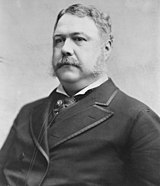
Chester A. Arthur rose from a New York lawyer and political organiser to the White House, becoming the 21st President of the United States. As US President, his presidency began after the assassination of James A. Garfield in 1881. Though initially associated with the patronage system, he later supported civil service reform.
His time in office was marked by administrative change, immigration measures and naval modernisation. He remains a notable figure in the history of the United States and the evolution of the modern presidency.
Family Background
Chester A. Arthur was born on October 5, 1829, in Fairfield, Vermont. He was the son of William Arthur, an Irish-born Baptist minister, and Malvina Stone Arthur. His father’s religious work took the family to several communities. This upbringing exposed him to education and public affairs.
The family later settled in New York, where he built political connections. His background helped shape his interest in public service. Before reaching national office, he had established himself as a lawyer and Republican political figure.
Education
Chester A. Arthur received his early education in Vermont and New York. He later attended Union College in Schenectady, New York, and graduated in 1848.
After college, he studied law. He was admitted to the New York bar in 1854. As a lawyer, he became involved in cases linked to civil rights and abolition. His legal experience strengthened his understanding of government and public administration.
His education prepared him for politics. His legal career created useful relationships within New York’s Republican organisation.
Political Career
Chester A. Arthur entered Republican politics in New York during a period of major national change. He became closely associated with Senator Roscoe Conkling and the Stalwart faction. In 1871, he was appointed Collector of the Port of New York. The post gave him influence over federal patronage.
His career changed when President Rutherford B. Hayes pursued civil service reform. Arthur was removed as collector in 1878. He later became James A. Garfield’s running mate in the 1880 presidential election.
After Garfield was fatally shot in 1881, Arthur became President. The transition placed him at the national centre. As US President, he faced pressure from competing Republican factions. As President, he gradually moved towards civil service reform.
The United States was undergoing rapid change. Arthur signed the Pendleton Civil Service Reform Act in 1883. The law introduced merit-based examinations for many federal positions and reduced the influence of political patronage.
The White House under Arthur reflected a formal presidential style. He was known for careful presentation and refined furnishings. His administration faced debates over tariffs, immigration and spending.
Achievement & Legacy
Chester A. Arthur’s strongest achievement was his support for civil service reform. The Pendleton Act represented a major shift in federal appointments. It helped establish the principle that government jobs should increasingly be awarded according to merit.
His administration also signed the Chinese Exclusion Act of 1882, which restricted Chinese immigration. Arthur had vetoed an earlier version because he considered its restrictions excessive, but Congress passed a revised measure. The measure remains controversial.
As US President, Arthur supported policies that strengthened federal administration. His naval policies helped begin modernisation. The White House also became a setting for a polished presidential image.
He left office in 1885 and did not seek another full term. His health later declined, and he died in New York on November 18, 1886.
The United States legacy of Chester A. Arthur rests on political transformation. A politician associated with patronage became a president who accepted meaningful civil service reform. His administration showed that leadership could change under pressure. The White House therefore occupies an important place in the development of federal administration.
As US President, his decisions shaped the administration. His story shows how political figures can evolve when national duties demand change. For the United States, his presidency marked a step towards a professional federal service and merit.
Leave a Reply