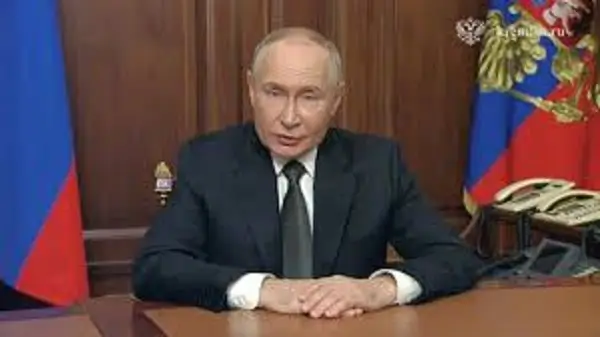
Russian President Vladimir Putin claimed that the United States is “pushing the world into global conflict.” This statement reflects longstanding tensions between Russia and the U.S. and highlights the complexities of contemporary geopolitics.
To understand the implications of Putin’s assertion, it is essential to consider the historical context, current global dynamics, and the potential consequences of such rhetoric.
The relationship between the United States and Russia has been fraught with rivalry, especially since the end of the Cold War. The dissolution of the Soviet Union in 1991 marked a significant shift in global power dynamics, leading to the expansion of NATO and the U.S.’s increasing influence in Eastern Europe.
Russia has viewed these developments as encroachments on its sphere of influence, contributing to a sense of insecurity and distrust.
Putin’s statement can be seen as a reaction to what he perceives as American hegemony and interventionism. From Russia’s perspective, U.S. actions in conflicts such as those in Iraq, Libya, and more recently, Ukraine, have often been framed as aggressive moves that destabilize regions and provoke backlash.
Putin’s assertion comes against the backdrop of escalating tensions in various parts of the world. Issues such as the ongoing conflict in Ukraine, U.S.-China relations, and the instability in the Middle East are contributing to a climate of uncertainty and potential conflict.
- Ukraine Conflict: The war in Ukraine, which escalated significantly after Russia’s annexation of Crimea in 2014, has led to severe diplomatic rifts between Russia and the West. The U.S. has provided substantial military and economic support to Ukraine, which Russia interprets as a direct threat.
- NATO Expansion: Putin has frequently criticized NATO’s expansion eastward, viewing it as a provocative strategy by the U.S. to encircle Russia. This perception fuels his narrative that America is actively seeking to destabilize global order in favor of its interests.
- Global Alliances: The rise of new alliances, such as the AUKUS pact between the U.S., the UK, and Australia, and increased military cooperation in the Indo-Pacific region, are seen by Russia as efforts to counter its influence. Putin’s statement can be understood as a warning against these emerging blocs, suggesting that they contribute to global instability.
Putin’s declaration serves several purposes:
- Domestic Audience: By blaming the U.S. for global conflict, Putin reinforces his position at home, rallying public support by framing the West as a common enemy. This tactic diverts attention from domestic issues and solidifies nationalistic sentiments.
- International Messaging: On the global stage, such statements seek to position Russia as a counterbalance to U.S. power. Putin aims to foster relationships with other nations that may feel marginalized by American policies, promoting a multipolar world order.
- Deterrence Strategy**: By emphasizing the risks of conflict, Putin may be attempting to deter Western nations from further military involvement in regions where Russia has strategic interests, signaling that aggressive actions could lead to escalation.
Potential Consequences
The ramifications of Putin’s statement are significant:
- Increased Tensions: Rhetoric like this can exacerbate existing tensions between Russia and Western nations, potentially leading to a more confrontational stance on both sides.
- Arms Race: Heightened perceptions of threat can spur an arms race, as nations seek to bolster their military capabilities in response to perceived aggression.
- Global Alliances Shift: Countries may reassess their alliances and diplomatic strategies in light of escalating rhetoric, leading to new coalitions and further fragmentation of international relations.
- Conflict Risk: Misinterpretations of intentions can lead to miscalculations, raising the risk of unintended military confrontations, particularly in contested regions.
Vladimir Putin’s assertion that America is “pushing the world into global conflict” reflects deep-seated grievances rooted in historical context and current geopolitical realities. As the world grapples with increasing tensions and competing interests, understanding the motivations behind such statements is crucial for navigating the complex landscape of international relations.
Dialogue and diplomacy will be essential in mitigating risks and fostering a more stable global environment, even as the rhetoric continues to unfold.
Leave a Reply