
Delta State is marking 35 years of creation today, August 27, 2026, with its journey defined by infrastructure, education, healthcare, human capital development and economic expansion. Created in 1991 from the former Bendel State, the oil-rich state has grown into one of Nigeria’s important economic and cultural centres. Under Governor Sheriff Oborevwori, attention has continued to be placed on infrastructure renewal, economic expansion and inclusive development as the state enters another phase of growth.
1. Major Road and Bridge Development
One of Delta State’s most visible achievements has been the expansion of its road network. Hundreds of road projects have been completed or initiated across the state, connecting urban centres, rural communities and riverine areas.
Under previous administrations, more than 850 road projects covering over 2,000 kilometres were recorded. Under Oborevwori, more than 513 road projects covering over 1,500 kilometres had also been undertaken, alongside major drainage projects.
2. Expansion of Tertiary Education
Education has remained a major part of Delta’s development story. Three state-owned universities were established between 2015 and 2023: the University of Delta, Agbor; Dennis Osadebay University, Asaba; and Delta State University of Science and Technology, Ozoro.
The tertiary education system has also been supported through infrastructure, accreditation, recruitment and improved facilities.
3. Growth of Technical and Vocational Education
Delta has also invested heavily in technical education and skills development. New model technical colleges and vocational centres have been established, while existing institutions have been rehabilitated.
The expansion has helped position technical and vocational education as an important pathway for young people seeking practical skills, employment and entrepreneurship.
4. Improved Healthcare Infrastructure
Healthcare delivery has been strengthened through the construction, upgrading and equipping of hospitals and primary healthcare facilities.
About 150 Primary Health Centres and 64 General Hospitals have been targeted for upgrading and re-equipping. Specialist healthcare facilities have also been developed, while modern diagnostic and dialysis equipment has been introduced in major hospitals.
5. Development of Aviation and Transport
Delta State has developed an important transport network that includes roads, airports, ports, jetties and railway infrastructure.
Asaba International Airport has become a major aviation asset, while Osubi Airport near Warri provides another important connection for passengers and businesses. The state’s ports and jetties have also supported movement within the riverine communities and commercial activities.
6. Expansion of Human Capital Programmes
Human capital development has increasingly been prioritised through education, empowerment, skills acquisition and social intervention programmes.
Under the Oborevwori administration, programmes such as D-CARES, MORE Grant, MORE Biz Up and empowerment initiatives have been expanded to support vulnerable households, women, young people and persons living with disabilities.
7. Urban Renewal Across Major Cities
Urban renewal has been another important achievement recorded over the years. Roads, drainage channels, bridges and public facilities have been developed in Asaba, Warri, Effurun, Ughelli, Sapele and other growing communities.
The ongoing renewal has been aimed at improving mobility, reducing flooding and making major urban centres more attractive for residents and investors.
8. Agricultural and Economic Development
Although Delta is widely known for its oil and gas resources, agriculture has continued to provide livelihoods for a large section of the population.
Investment in rural roads, skills acquisition, small businesses and economic empowerment has been used to broaden economic opportunities beyond petroleum. The need to transform the state’s natural resources into sustainable economic value has also been emphasised as Delta looks beyond dependence on crude oil.
9. Stronger Social and Public Institutions
Over the years, Delta has invested in public institutions, schools, libraries, courts and other government facilities.
A modern High Court Complex was completed and commissioned in Asaba under the Oborevwori administration. Support has also been provided for pension obligations, workers’ promotion arrears and other public-sector commitments.
10. Peace, Unity and Political Stability
Perhaps one of Delta State’s most important achievements has been the preservation of its identity and relative unity despite its ethnic, cultural and geographical diversity.
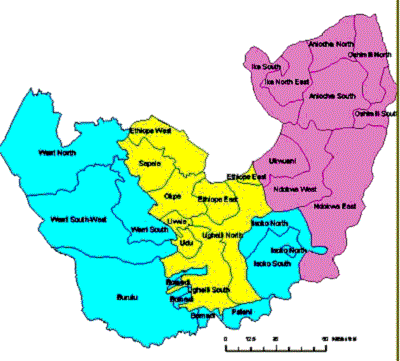
As the state marks 35 years, its people, peace and unity have been described as among its greatest assets. Successive governments have contributed to maintaining this foundation while development has been pursued across the three senatorial districts.
Delta State at 35 therefore represents more than three and a half decades of political administration. It represents a continuing investment in roads, bridges, schools, universities, hospitals, airports, skills, agriculture and human capital. Governor Sheriff Oborevwori has pledged to build on the achievements of previous administrations while pursuing a new era of sustainable growth and prosperity.
As Delta celebrates its 35th anniversary on August 27, 2026, the central message remains clear: the oil-rich state has travelled a significant development journey since its creation in 1991, and the task now is to preserve its achievements while creating a stronger, more diversified and prosperous Delta for future generations.
Leave a Reply