Delta State Traffic Management Authority (DESTMA) is responsible for traffic control, road safety and enforcement of vehicular regulations across Delta State. The authority works with the Nigeria Police Force, the Vehicle Inspection Unit and relevant government agencies to improve traffic management and protect road users. Its powers include the arrest of suspected traffic offenders, vehicle impoundment and enforcement of applicable traffic laws.
DESTMA Functions and Responsibilities
DESTMA was established to provide organised traffic management and improve safety on roads across Delta State. Traffic laws are enforced through patrols, targeted operations and public awareness programmes.
The authority is required to control traffic and enforce applicable State and Federal laws. Cooperation is maintained with the Vehicle Inspection Unit of the Directorate of Transport, the Nigeria Police Force and other agencies with related responsibilities.
Road traffic offenders may be deterred and apprehended. Practical measures are also expected to be taken to reduce road casualties.
Mobile and random breath testing may be conducted to detect drivers suspected of driving under the influence of alcohol. Motor vehicles, motorcyclists, cyclists and pedestrians are also expected to be protected at railway crossings and during public processions.
Construction zones, highways and streets are monitored. Measures are taken to protect vehicles and pedestrians in areas where road works are being carried out.
Strategic public transport infrastructure is also regulated. Transport operators are expected to use designated facilities for safer boarding and disembarkation.
Innovative traffic management strategies are researched and implemented. Accident response and management are also provided for, including an emergency helpline that is expected to be widely communicated.
Public awareness campaigns are conducted against roadside trading, street hawking and alms begging on highways. Day and night patrols are carried out to enforce traffic rules and clear road obstructions.
Road safety programmes are also developed for children, older persons, physically challenged persons and other vulnerable road users.
DESTMA Enforcement and Legal Powers
The authority has enforcement powers under its enabling law. These powers are intended to ensure compliance with traffic regulations and improve safety on Delta State roads.
DESTMA officers may arrest persons suspected of violating provisions of the law or other laws regulating vehicular traffic in the State. Vehicles involved in violations may also be impounded.
A vehicle may be removed and detained when it is considered unroadworthy or when it is parked in a manner that causes traffic obstruction. Impounded vehicles may be moved to designated vehicle parks.
After the first 24 hours of detention, custody fees may become payable for each additional day of detention where no case is pending. Where an impounded vehicle is not reclaimed within six months, it may become vested in the State Government, which may dispose of it as permitted by law.
Penalty Points and Traffic Offences
A penalty points rating system is provided for under the law. Points are applied to traffic offences according to the applicable schedule.
Where an offender accumulates more than 20 penalty points within three months, the offender’s driving licence may be withdrawn for six months in the first instance.
False information or refusal to provide required information to an authorised officer may also attract punishment. A person found guilty may face a fine of N20,000 or imprisonment for up to six months.
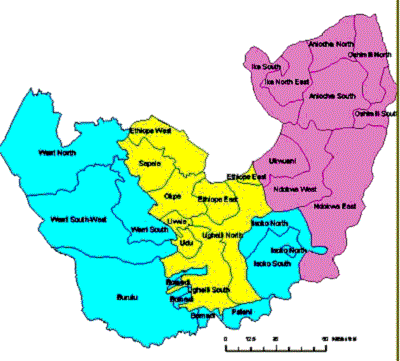
Suspected offenders may be prosecuted before a Magistrates’ Court or a Mobile Traffic Court in Delta State. Prosecution may be undertaken by a Legal Officer from the State Ministry of Justice or an officer of the Nigeria Police Force.
A court may also impose imprisonment of up to six months in place of penalties provided under the relevant schedule, where applicable.
History and Establishment of DESTMA
DESTMA’s legal framework dates back to 2013. The DESTMA Law came into force on October 24, 2013. Its establishment and assent were recorded on December 4, 2013, as an Executive Bill under the administration of former Delta State Governor, Dr Emmanuel Eweta Uduaghan.
The operationalisation of the law was later approved by the Delta State Executive Council on November 24, 2015. The authority was subsequently inaugurated on May 14, 2016, by former Governor Senator (Dr) Ifeanyi Arthur Okowa.
Wider Transport Responsibilities
Beyond traffic enforcement, DESTMA is also assigned wider transport management responsibilities. The licensing and regulation of passenger and freight transport operators are included among its functions.
A bus driver competence framework is expected to be developed and maintained. Professional training is to be provided as a prerequisite for obtaining a licence to drive passenger buses.
An integrated public transport system is also expected to be developed across Delta State. The authority is required to produce annual work plans and advise the government on public transport matters.
Transport statistics are to be gathered, analysed and published. Cooperation is also expected with local, national and international organisations involved in road safety and accident prevention.
Environmental initiatives are included within its responsibilities. Collaboration with government and relevant Federal agencies is expected to support measures aimed at reducing carbon emissions.
DESTMA may also enter agreements for the supply, construction, manufacture, maintenance or repair of property required for the performance of its duties.
The history and functions of the Delta State Traffic Management Authority show that its role extends beyond roadside enforcement. Traffic control, road safety, public transport regulation, accident response and public awareness are all incorporated into its responsibilities. Through these functions and enforcement powers, DESTMA is positioned as a key agency for improving road safety and traffic management across Delta State.
Leave a Reply