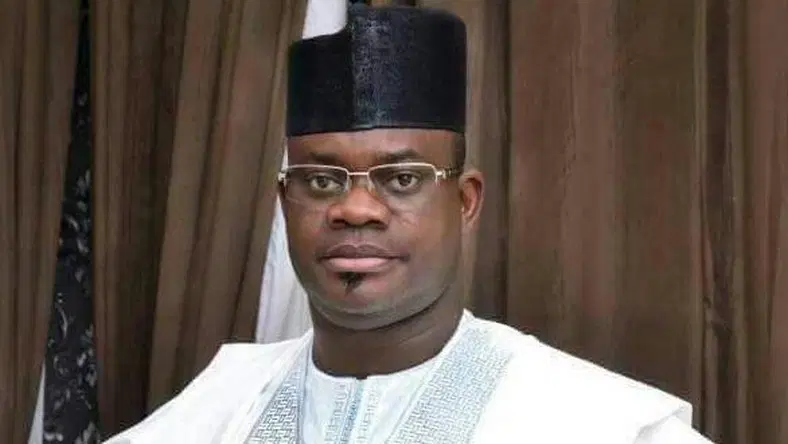
On Wednesday, Alhaji Yahaya Bello, the former Governor of Kogi State, pleaded not guilty to a 16-count charge brought against him by the Economic and Financial Crimes Commission (EFCC). The charges were related to an alleged N110 billion fraud.
Bello appeared before Justice Maryann Anenih at the High Court of the Federal Capital Territory in Maitama, alongside two co-defendants, Umar Oricha and Abdulsalami Hudu. The three individuals face allegations of involvement in the massive fraud.
The former governor, who had been elusive for some time, finally surrendered himself to the EFCC after a prolonged period in hiding. He appeared in court on Wednesday wearing a white caftan and a blue cap around 9:45 a.m.
The charges, under case number CR/7781, include conspiracy, criminal breach of trust, and the possession of unlawfully obtained property. The EFCC accuses Bello of misappropriating public funds to acquire several high-value properties, including:
- No. 35 Danube Street, Maitama District, Abuja (N950 million)
- No. 1160 Cadastral Zone C03, Gwarimpa II District, Abuja (N100 million)
- No. 2 Justice Chukwudifu Oputa Street, Asokoro, Abuja (N920 million)
- Block D, Manzini Street, Wuse Zone 4, Abuja (N170 million)
- Hotel Apartment, Burj Khalifa, Dubai (AED 5.7 million)
- Block 18, Gwelo Street, Wuse Zone 4, Abuja (N60 million)
- No. 9 Benghazi Street, Wuse Zone 4, Abuja (N310.4 million)
Additionally, the EFCC claims the defendants transferred substantial sums of money to international accounts, including $570,330 and $556,265 to TD Bank, USA, and were found in possession of over N677 million from Bespoque Business Solution Limited.
This case marks a significant development in the ongoing fight against corruption in Nigeria, with the EFCC continuing its efforts to hold public officials accountable for the misuse of public funds.
Leave a Reply