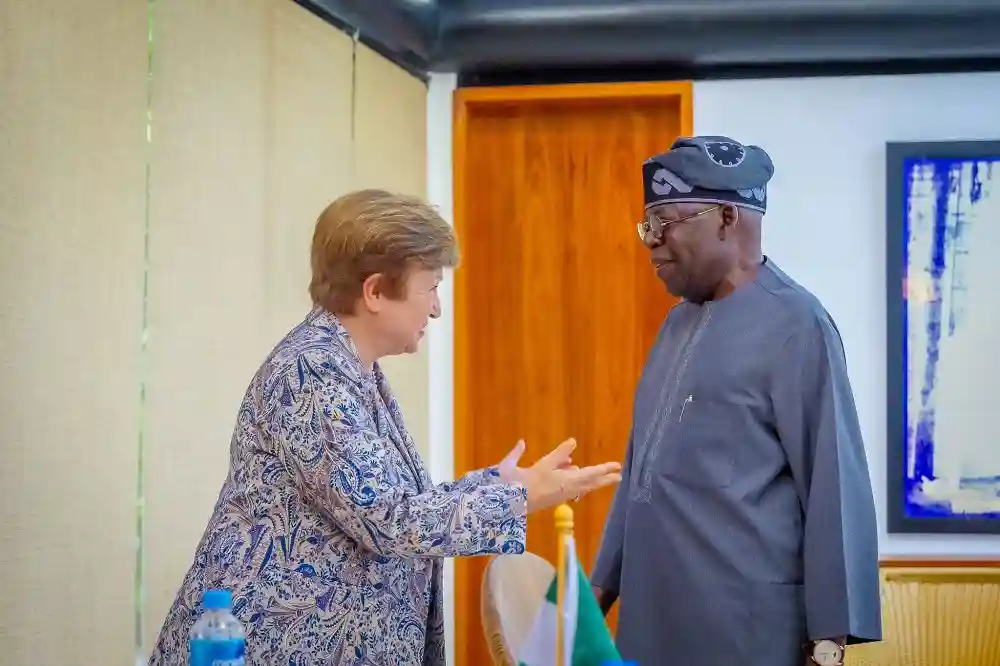
In a pivotal meeting held in Rio de Janeiro during the G20 summit, Kristalina Georgieva, the Managing Director of the International Monetary Fund (IMF), along with her team, met with Nigerian President Bola Tinubu to discuss economic cooperation and support for Nigeria’s ongoing reforms. This engagement underscores the IMF’s commitment to assisting Nigeria as it navigates significant economic challenges.
During the meeting on Wednesday evening, Georgieva expressed strong support for the Tinubu administration’s reform agenda, which aims to stabilize the economy and promote sustainable growth. The discussions focused on various key initiatives, including enhancing fiscal responsibility, improving governance, and fostering private sector investment.
The IMF’s backing is critical as Nigeria seeks to implement comprehensive reforms designed to address longstanding structural issues, such as revenue generation and public expenditure management. These reforms are seen as essential to building resilience against external shocks and ensuring long-term economic stability.
Georgieva emphasized the importance of collaboration between the Nigerian government and international financial institutions in achieving these goals. She highlighted the potential for Nigeria to leverage its resources and strategic position within the African continent to drive economic development and improve the living standards of its citizens.
The meeting also provided an opportunity to discuss the challenges posed by global economic uncertainties, including inflation and supply chain disruptions. The IMF reiterated its readiness to provide technical assistance and policy advice to support Nigeria in navigating these complexities.
As Nigeria moves forward with its reform agenda, the endorsement from the IMF is expected to bolster investor confidence and attract foreign direct investment. The commitment from the IMF reflects a recognition of Nigeria’s potential and the necessity of strategic reforms to unlock economic growth.
The outcomes of this meeting will likely have significant implications for Nigeria’s economic trajectory and its relationship with international financial institutions. As the government works to implement these reforms, ongoing dialogue with the IMF and other global partners will be crucial in ensuring the successful execution of its economic plans.
Leave a Reply