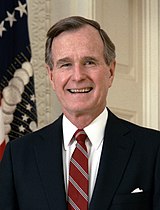
George H. W. Bush was remembered as one of the most experienced leaders in modern American politics, having served in several high-ranking public offices before becoming President of the United States. His career was marked by military service, diplomacy, intelligence leadership and executive governance. Throughout his public life, a significant contribution was made to domestic administration and foreign affairs.
This profile presents George H. W. Bush, his family background, education, political journey, time as Vice President, presidency, major achievements, challenges in office and his place in the List of US President. His tenure was characterised by important international developments, while his party remained influential in shaping national policies across the United States.
Table of Contents
Family and Early Life of George H. W. Bush
George H. W. Bush was born on 12 June 1924 in Milton, Massachusetts, in the United States. He was raised in a family known for public service and business leadership. His father, Prescott Bush, served as a United States senator, while his mother, Dorothy Walker Bush, was recognised for her dedication to family values.
In 1945, he married Barbara Pierce Bush, and together they built a family that became one of the best-known political families in the United States. Their children included:
- George W. Bush
- Jeb Bush
- Neil Bush
- Marvin Bush
- Dorothy Bush Koch
- The late Pauline Robinson Bush
Strong family values were consistently emphasised throughout his public life, and his family remained actively involved during his tenure in public office. His place in the List of US President has often been associated with one of America’s most influential political families. His party also benefited from the prominence of the Bush family across the United States.
Education and Military Service
George H. W. Bush received his education at Phillips Academy in Andover, Massachusetts. Following the attack on Pearl Harbor, military service was chosen before university studies were completed. He became one of the youngest naval aviators during the Second World War.
After the war, he attended Yale University, where a degree in Economics was earned in 1948. Leadership qualities were displayed through academic activities and sports participation.
His educational background prepared him for business and later public service in the United States. Before entering politics, valuable experience was gained in the oil industry. His growing reputation eventually positioned him among future leaders featured in the List of US President. His tenure in business strengthened the management skills later demonstrated in government, while his party recognised his leadership potential.
Political Career and Vice President
George H. W. Bush built an extensive political career before reaching the White House. Several important offices were held, including:
- Member of the United States House of Representatives
- United States Ambassador to the United Nations
- Chairman of the Republican National Committee
- Chief of the United States Liaison Office in China
- Director of the Central Intelligence Agency (CIA)
- Vice President of the United States from 1981 to 1989 under President Ronald Reagan
His service as Vice President provided valuable executive experience and strengthened his national profile. During those eight years, domestic programmes and international initiatives were supported through close cooperation with the administration.
His steady leadership was recognised across the United States, leading to his election as President in 1988. His place in the List of US President reflected decades of public service. His tenure as Vice President laid the foundation for his presidency, while his party continued to expand its national influence.
George H. W. Bush Presidency and Major Achievements
George H. W. Bush became the 41st President of the United States on 20 January 1989. His tenure lasted until 20 January 1993, making him one of the most experienced leaders to occupy the White House.
Several notable achievements were recorded during his presidency, including:
- Leadership during the peaceful end of the Cold War.
- Successful international coalition during the Gulf War.
- Signing of the Americans with Disabilities Act (ADA).
- Support for environmental legislation through the Clean Air Act Amendments.
- Promotion of international diplomacy following the collapse of the Soviet Union.
His foreign policy was widely recognised for encouraging international cooperation. Throughout his tenure, efforts were made to strengthen alliances and promote global stability.
George H. W. Bush continued to be respected for his diplomatic leadership. His achievements secured an enduring position in the List of US President. His party highlighted his experience in international relations, while the United States experienced significant geopolitical change.
Challenges Faced in Office and Lasting Legacy
Despite many accomplishments, George H. W. Bush also faced significant challenges during his presidency. An economic recession affected the United States, leading to public dissatisfaction over employment and economic growth. A campaign promise regarding taxes became controversial after tax increases were approved to address budget concerns.
Political competition also intensified, resulting in electoral defeat in the 1992 presidential election. Even so, his public service continued to be admired across political divisions.
Today, George H. W. Bush remains recognised for his integrity, diplomatic approach and commitment to national service. His remarkable journey from naval aviator to Vice President and President continues to inspire future generations. His place in the List of US President reflects a distinguished tenure defined by leadership, responsibility and service. His party continues to acknowledge his contributions, while the United States remembers him as a statesman whose influence extended far beyond his years in office.
Leave a Reply