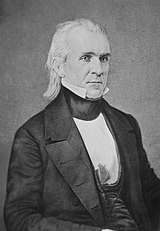
James Knox Polk was an influential American politician who served as the 11th President of the United States from March 4, 1845, to March 4, 1849. A member of the Democratic Party, Polk’s presidency was defined by significant territorial expansion and the fulfillment of his key campaign promises, most notably the acquisition of vast territories through the Mexican-American War.
Born on November 2, 1795, in Mecklenburg County, North Carolina, Polk went on to have a distinguished political career. He served as the 13th Speaker of the U.S. House of Representatives and as the 9th Governor of Tennessee before becoming president. His political background and strong leadership were key to his success as president.
Polk’s presidency is best known for its emphasis on expanding the United States. Under his leadership, the U.S. acquired significant territories, including Texas, the Oregon Territory, and much of the Southwest following the Mexican-American War (1846–1848). These territorial gains helped shape the nation’s boundaries and had a lasting impact on U.S. politics and military affairs.
Polk’s administration was also marked by the establishment of an independent treasury system, a reduction in tariffs, and the completion of the California gold rush that started at the end of his presidency.
Polk, who served only a single term, chose not to seek re-election in 1848 due to his successful fulfillment of his campaign goals. He passed away on June 15, 1849, just three months after leaving office, at the age of 53, due to complications from a stroke.
James K. Polk’s presidency is often regarded as one of the most successful in terms of achieving its goals, particularly in expanding U.S. territory, but also one of the most controversial, given the war with Mexico and the associated costs. His legacy continues to be debated by historians, but his contributions to U.S. growth during the 19th century are undeniable.
Leave a Reply