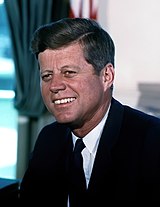
John F. Kennedy remains one of the most recognised political figures in modern American history. As US President, John F. Kennedy was remembered for his youthful leadership, public communication and role during a tense period in the United States of America. His presidency was brief, but its influence was considerable. His family background, education, achievements and challenges continue to attract attention.
John F. Kennedy and Family
John F. Kennedy was born on 29 May 1917 in Brookline, Massachusetts. He was the second of nine children born to Joseph P. Kennedy Sr. and Rose Fitzgerald Kennedy. The Kennedy family was wealthy and politically connected, with public service becoming a major feature of the family’s identity.
His siblings included Robert F. Kennedy and Edward M. Kennedy, both of whom later became prominent political figures. A strong family network was maintained throughout his political career.
John F. Kennedy married Jacqueline Bouvier in 1953. Their children, Caroline and John F. Kennedy Jr., became well known internationally. A third child, Patrick, died shortly after birth.
Education and Early Development
John F. Kennedy received his early education at private schools before attending Harvard University. He graduated in 1940 with a degree in government. His undergraduate thesis was later published as a book, Why England Slept.
His education was followed by military service during the Second World War. His experiences in the Pacific were later reflected in his public image and political career.
The United States of America was experiencing significant social and international changes during his rise. Political leadership was increasingly being shaped by television, mass communication and Cold War tensions.
Parents and Children
Joseph P. Kennedy Sr. was a businessman and former ambassador to the United Kingdom. Rose Kennedy was known for her strong Catholic faith and commitment to her large family.
The children of John F. Kennedy and Jacqueline Kennedy were raised under intense public attention. Caroline Kennedy survived into adulthood and later served as a diplomat. John F. Kennedy Jr. became a lawyer, publisher and public figure.
As US President, family life was frequently presented to the public. The White House was transformed into a highly visible centre of American political and cultural life.
Achievements and Presidential Legacy
John F. Kennedy became the 35th president of the United States in January 1961. He was the youngest person elected to the presidency at that time and the first Roman Catholic to hold the office.
Several achievements became associated with his administration:
- The Peace Corps was established.
- The space programme received major political support.
- Civil rights legislation was advanced.
- The Cuban Missile Crisis was managed through diplomacy and military pressure.
- The United States of America strengthened its commitment to the space race.
The US President also delivered influential speeches that encouraged public service and national responsibility. His administration’s approach to the Cold War was closely watched around the world.
Challenges, Crisis and Enduring Influence
John F. Kennedy faced serious challenges during his presidency. The Bay of Pigs invasion in Cuba became an early setback. The Cuban Missile Crisis later brought the United States of America and the Soviet Union dangerously close to nuclear conflict.
Civil rights also presented a major domestic challenge. Protests, racial discrimination and political resistance required increasingly direct federal action. As US President, Kennedy eventually gave stronger public support to civil rights legislation.
The US President was assassinated in Dallas, Texas, on 22 November 1963. His death shocked the United States of America and generated worldwide mourning. Investigations and continuing public debate have ensured that his assassination remains one of the most discussed events in American political history.
The legacy of John F. Kennedy has therefore been shaped by both achievement and tragedy. His education, family background, presidential decisions and challenges remain important parts of his historical profile. John F. Kennedy is still remembered for the ambition associated with his administration, while the United States of America continues to examine the significance of his short presidency. For many observers, the story of John F. Kennedy remains a defining example of how a US President can leave a lasting national and international impact despite a brief period in office.
Leave a Reply