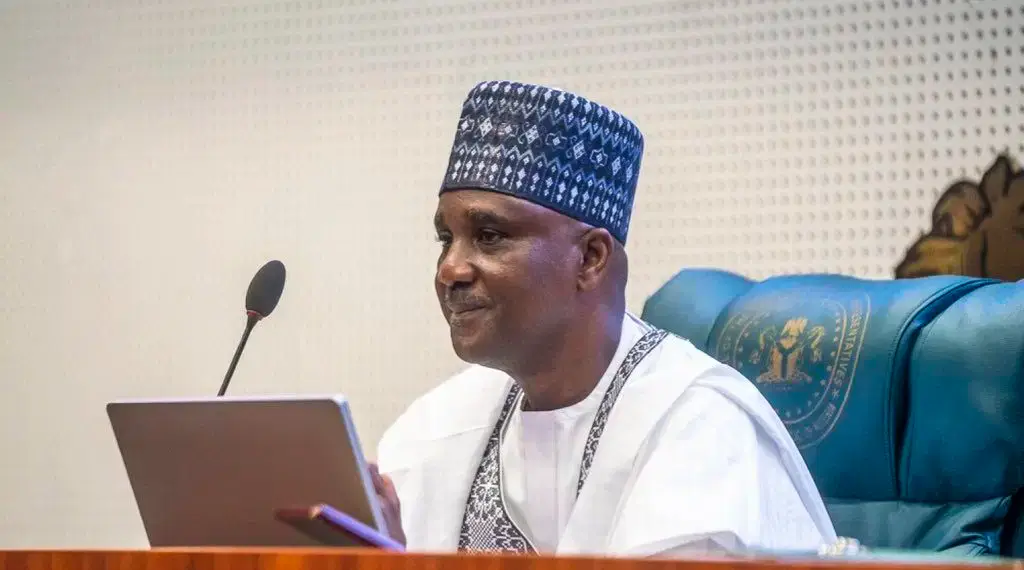
The Speaker of the House of Representatives, Rt. Hon. Abbas Tajudeen, has raised serious concerns over Nigeria’s ballooning public debt, warning that the current trajectory poses grave risks to fiscal stability and economic sustainability.
Speaking at the 11th Annual Conference and General Assembly of the West Africa Association of Public Accounts Committees (WAAPAC) in Abuja, Abbas disclosed that Nigeria’s total public debt stood at ₦149.39 trillion (approximately US$97 billion) as of the first quarter of 2025.
He stressed that the country has breached its own statutory debt ceiling, with the debt-to-GDP ratio now at 52 percent – well above the 40 percent legal limit. “This breach of our debt limit signals the strain on fiscal sustainability,” the Speaker said, cautioning that the situation demands urgent parliamentary intervention.
A Continental Challenge
Abbas also painted a broader picture of Africa’s growing debt crisis, noting that the continent’s public debt reached US$1.8 trillion by 2022, with external debt projected to exceed US$1 trillion. He cited alarming debt-to-GDP ratios in several African countries, including Sudan (344%), Angola (136.8%), Ghana (84%), Kenya (70%), and South Africa (77%).
According to him, the composition of Africa’s external financing reveals heavy reliance on private Western lenders (35%), multilateral institutions such as the World Bank and IMF (39%), and bilateral loans (13%). Chinese creditors, he clarified, hold just 12 percent, contrary to popular perception.
“The implications are far-reaching. A significant share of national revenues is now tied to debt servicing rather than development priorities like healthcare, education, and infrastructure,” Abbas said.
Call for Stronger Oversight
The Speaker urged African parliaments to strengthen public debt oversight, ensure transparency in borrowing practices, and promote domestic resource mobilisation. He announced Nigeria’s readiness to spearhead a West African Parliamentary Debt Oversight Framework under WAAPAC to harmonise debt reporting, set transparency standards, and enhance capacity building across the region.
“Major borrowing proposals should be subject to public hearings, and simplified debt reports must be made available to the public. Oversight is most effective when it is not only parliamentary but also people-driven,” Abbas declared.
Government’s Response
Offering a more optimistic perspective, Minister of Finance and Coordinating Minister of the Economy, Mr. Wale Edun, maintained that Nigeria’s economic reforms are already yielding results. He noted that the country’s debt service-to-revenue ratio dropped to 60 percent in 2024, while the debt-to-GDP ratio currently stands at 38.8 percent – below global benchmarks.
Edun highlighted a 34.7 percent increase in government revenues in the first half of 2025, attributing the gains to subsidy removal, exchange rate reforms, and improved tax collection. “Nigeria is turning the corner,” he said, insisting that transparency and fiscal discipline remain key to sustainable growth.
Institutional Reforms
Senate President Godswill Akpabio, represented by Senator Osita Izunaso, emphasized the need for robust legislative institutions to monitor borrowing, warning that “unchecked public debt becomes a burden that mortgages the future of our citizens.”
Chairman of the House Committee on Public Accounts, Rep. Bamidele Salam, revealed that the committee had recovered over ₦200 billion in lost revenues in the past year and introduced digital innovations to enhance transparency.
WAAPAC President, Hon. Issouf Traore, commended Nigeria for hosting the event and praised President Bola Tinubu’s reforms aimed at stabilizing the economy.
The Way Forward
Speaker Abbas concluded by urging West African countries to use WAAPAC as a platform for solidarity and collective action. “Unsustainable debt in one country can weaken the stability of others and undermine regional development. Our response must be collective, transparent, and forward-looking,” he said.
Leave a Reply