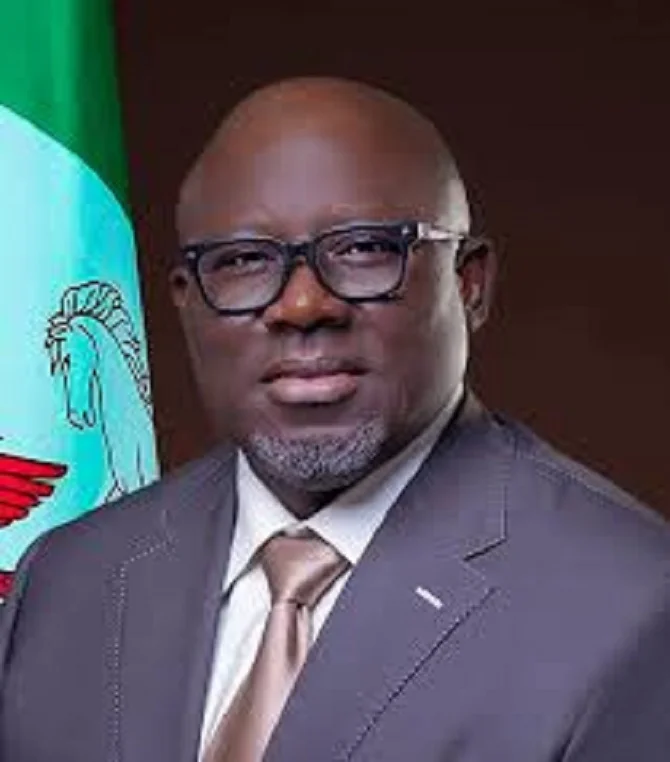
Governor Sheriff Oborevwori has unveiled the 2026 Appropriation Bill before the Delta State House of Assembly, setting the stage for another year of policy acceleration under his administration’s MORE Agenda. The proposal, tagged the “Budget of Accelerating the MORE Agenda,” outlines an ambitious framework aimed at deepening development across key sectors.
In presenting the N1.664 trillion estimate, the governor emphasized the need to sustain ongoing reforms while expanding infrastructural investments that support inclusive growth. He noted that the fiscal plan was carefully crafted to respond to both current economic realities and long-term development aspirations.
A significant portion of the budget focuses on infrastructural consolidation—roads, bridges, and urban renewal projects expected to improve connectivity within the state. According to the governor, these investments will serve as the spine of economic activity, ensuring rural and urban communities remain productive and accessible.
The budget also prioritizes education, health, and human capital development. Oborevwori highlighted plans to strengthen public schools, improve healthcare facilities, and enhance welfare initiatives aimed at empowering young people and vulnerable groups.
Another key component is job creation and enterprise expansion. The administration intends to support small businesses through targeted interventions, training programmes, and improved access to finance. The goal, he said, is to stimulate a more resilient private sector capable of driving sustainable employment.
Agriculture, a longstanding pillar of Delta State’s economic base, remains central to the 2026 spending plan. The governor outlined strategies to boost commercial farming, support agro-processing, and enhance food security across the state. These measures are expected to expand value chains and improve rural livelihoods.
In the area of security, a portion of the budget is dedicated to strengthening local initiatives, intelligence gathering, and community-based policing partnerships. Oborevwori stressed that economic development thrives only in safe and stable environments.
Environmental sustainability also features prominently. From erosion control to climate adaptation projects, the budget seeks to mitigate ecological challenges that continue to affect coastal and riverine communities.
The governor reaffirmed his administration’s commitment to transparency and fiscal responsibility, assuring lawmakers that spending will be monitored closely to ensure value for money. He called for the cooperation of all stakeholders as the state navigates a challenging but promising developmental path.
As the House begins its deliberations on the N1.664 trillion proposal, the 2026 budget stands as a signal of the state government’s intent to accelerate the MORE Agenda and deliver wide-reaching improvements for the people of Delta State. FOB!
Leave a Reply