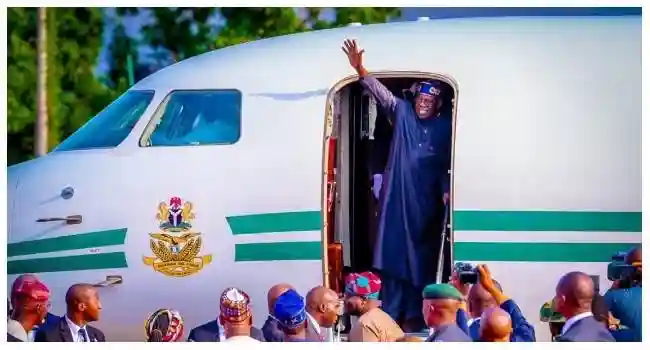
President Bola Tinubu has returned to Abuja after completing a series of high-level international engagements, including a state visit to France and participation in the 11th session of the Nigeria-South Africa Bi-National Commission in Cape Town, South Africa.
These diplomatic ventures underscore Nigeria’s growing role on the international stage, as Tinubu seeks to bolster bilateral relations and explore opportunities for economic and diplomatic cooperation with key global and regional partners.
Strengthening Ties with South Africa
A significant highlight of President Tinubu’s trip was his participation in the 11th session of the Nigeria-South Africa Bi-National Commission, co-chaired with South African President Cyril Ramaphosa. This session marked a major milestone, as it celebrated 30 years of diplomatic relations between the two nations. Over the years, Nigeria and South Africa have built strong ties, and this year’s anniversary provided an opportunity to deepen collaboration in several key sectors, including trade, investment, and security.
The discussions during the meeting focused on enhancing economic cooperation, improving trade relations, and fostering deeper cultural and educational exchanges. Both leaders emphasized the importance of building a more resilient and diversified economic partnership, which could prove essential for the continued growth of both nations and the African continent at large.
Additionally, the Bi-National Commission delved into critical matters related to security, with both countries reaffirming their commitment to working together in tackling common challenges such as terrorism, climate change, and instability in the region. As two of Africa’s largest economies, Nigeria and South Africa play pivotal roles in the continent’s political and economic spheres, and their continued collaboration will be crucial for achieving sustainable development and peace across Africa.
The French Visit: Diplomacy Amidst Regional Shifts
Following his time in South Africa, President Tinubu visited France, a trip that has sparked significant discussions in Nigeria. The visit to France came at a time of shifting regional dynamics in West Africa, particularly in light of recent political changes and instability in the Sahel and Francophone countries. Nigeria’s relationship with France, a former colonial power in West Africa, has always been of great significance, especially in the realms of security, trade, and diplomatic engagement.
While details of the visit remain under wraps, it is widely believed that the discussions with French President Emmanuel Macron centered on strengthening ties in areas such as trade, energy, and security cooperation. One of the focal points of the discussions may have been the ongoing fight against terrorism and insurgency, particularly in the Lake Chad Basin region, where both nations have actively collaborated through various international organizations.
The visit also raised questions among Nigerians about the future of their country’s foreign relations, especially regarding France’s evolving role in West Africa. In recent years, France’s influence in the region has faced growing challenges, particularly as anti-French sentiment has risen in former colonies. Many Nigerians are keen to see how these dynamics will shape the future of Nigeria’s engagement with France and whether Tinubu’s administration will seek to recalibrate its foreign policy in response to these changes.
President Tinubu’s travels signal a renewed focus on Nigeria’s foreign relations as the country positions itself as a key player in global diplomacy. His engagements in both South Africa and France reflect Nigeria’s strategic approach to diversifying its international partnerships and enhancing its influence on the global stage. As Tinubu returns to Abuja, the question on many Nigerians’ minds is how his administration will navigate the changing geopolitical landscape, particularly in West Africa, and whether it will continue to prioritize relationships with former colonial powers or chart a new course toward greater autonomy and self-determination in foreign policy.
President Tinubu’s recent international engagements in France and South Africa underscore his administration’s commitment to strengthening Nigeria’s diplomatic and economic ties with key global players.
Leave a Reply