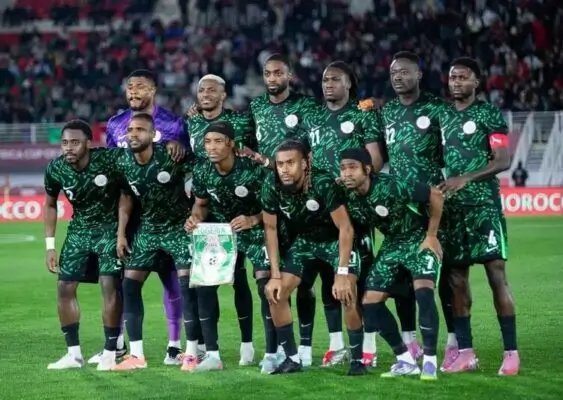
The Super Eagles have received disappointing news following confirmation by FIFA that Nigeria will not participate in the 2026 World Cup after losing the decisive play-off against DR Congo. The Super Eagles had entered the qualification campaign with strong hopes of securing a place at the global tournament, but the outcome of the play-off ultimately ended their journey. This development has sparked widespread reactions among football supporters, analysts and administrators who are now reflecting on the team’s performance and the broader implications for Nigerian football.
Background to the World Cup qualification campaign
Nigeria began the qualification process with high expectations due to its long-standing reputation in African football. The Super Eagles have historically been one of the continent’s most competitive teams and have participated in several previous World Cup tournaments. Many supporters believed the national team had the quality and experience needed to reach the 2026 competition.
Throughout the qualification stages, Nigeria faced strong opponents across the African region. The competition was intense, with several teams demonstrating improved tactical discipline and technical strength. While Nigeria managed to remain competitive in earlier stages, the decisive play-off against DR Congo became the defining moment of the campaign.
The confirmation from FIFA that Nigeria would not advance beyond the play-off has therefore come as a major setback for fans who had hoped to see the national team return to the world stage.
Super Eagles performance in the decisive play-off
The match against DR Congo was widely regarded as one of the most important fixtures in Nigeria’s recent football history. The Super Eagles approached the game with determination, knowing that victory would secure their qualification for the global tournament.
However, the play-off proved to be a difficult contest. DR Congo displayed strong defensive organisation and effective counter-attacking play throughout the match. Nigeria created several opportunities but struggled to convert chances into goals.
As the match progressed, pressure mounted on the Nigerian side, and the final outcome ultimately favoured DR Congo. With the result confirmed, the Super Eagles were officially eliminated from the qualification process, bringing an abrupt end to their World Cup ambitions.
Football analysts have since examined various factors that influenced the outcome, including tactical decisions, squad selection and overall team coordination during the match.
Reactions across Nigeria and the football community
The elimination from the 2026 tournament has generated significant reactions from football supporters across Nigeria. Fans who had hoped for another appearance at the global competition expressed disappointment but also emphasised the need for reflection and improvement within the national team structure.
Sports commentators and former players have also shared their perspectives on the situation. Some analysts argue that the result highlights deeper structural challenges within Nigerian football, including the need for better long-term planning and stronger investment in player development.
Despite the disappointment, many supporters continue to express loyalty to the national team. Football in Nigeria remains deeply connected to national identity, and the Super Eagles continue to represent the aspirations of millions of fans.
Impact on the future of Nigerian football
The absence of Nigeria from the 2026 World Cup may have broader implications for the country’s football development. Participation in major international tournaments often attracts investment, sponsorship opportunities and global exposure for players.
Without qualification, administrators and football authorities may need to reassess strategies for strengthening the national team. This includes improving grassroots development, enhancing domestic league structures and supporting youth academies that nurture emerging talent.
The disappointment of the current campaign could also serve as motivation for rebuilding efforts. Nigerian football has previously experienced difficult moments before returning stronger in subsequent competitions. Many observers believe that careful planning and effective leadership will be essential for future success.
Media platforms such as Felix Omoko Blog continue to analyse developments within Nigerian sports and provide perspectives on key events affecting the nation’s football landscape. By examining both successes and challenges, Felix Omoko Blog contributes to broader discussions about the future direction of Nigerian football.
Looking Ahead for Upcoming Tournaments
Although the outcome of the DR Congo play-off has closed the door on Nigeria’s participation in the upcoming World Cup, attention is already shifting towards the future. Football authorities, coaching staff and players are expected to review the qualification campaign in order to identify lessons that can guide future improvements.
Rebuilding confidence within the squad will be an important priority. The national team still possesses talented players competing in major leagues around the world. Harnessing that talent through effective management and strategic planning could help Nigeria return to the top level of African football.
Supporters also hope to see renewed commitment to youth development programmes that identify promising young footballers across the country. By investing in grassroots football, Nigeria can strengthen its pipeline of talent for future international competitions.
While the disappointment of missing the 2026 tournament will remain fresh for many fans, Nigerian football has historically demonstrated resilience. The lessons learned from this experience may ultimately contribute to a stronger and more competitive national team in the years ahead.
Leave a Reply