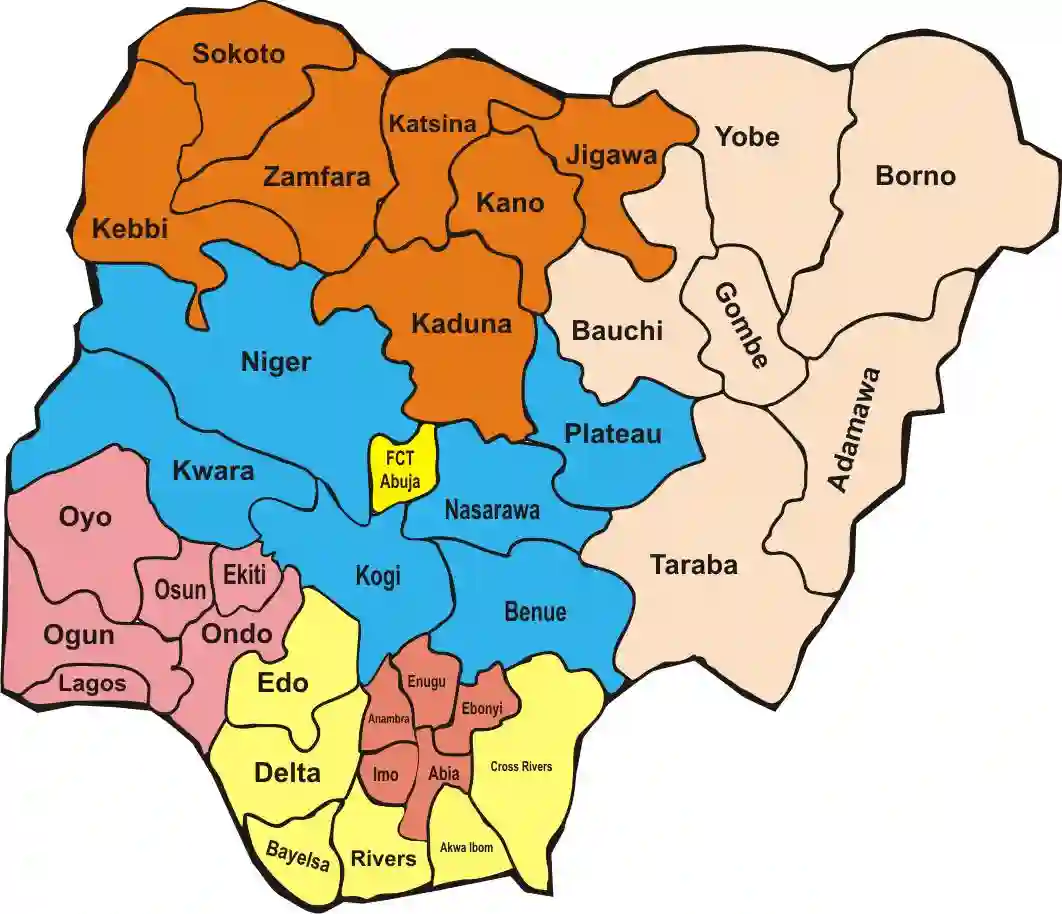
Nigeria, one of Africa’s most populous countries, is divided into six geopolitical zones. These zones serve as a means to organize the country’s vast political, economic, and social resources, ensuring equitable distribution and promoting balanced regional development.
The six zones in Nigeria are as follows:
1. North Central Zone
- States: Benue, Kogi, Kwara, Nasarawa, Niger, Plateau, and the Federal Capital Territory (FCT)
The North Central region is often considered the “Middle Belt” of Nigeria. It serves as a bridge between the northern and southern regions, with Abuja, the nation’s capital, located in this zone. The zone is rich in agriculture, mining, and has significant cultural diversity. Key industries include agriculture, particularly crops like yams, maize, and rice, and mineral resources such as tin and limestone.
2. North East Zone
- States: Adamawa, Bauchi, Borno, Gombe, Taraba, and Yobe
The North East is known for its vast arid landscapes and is home to some of the oldest cities in Nigeria, such as Maiduguri and Yola. The zone has faced numerous security challenges in recent years, particularly due to insurgencies. Despite this, it remains an important region for agriculture (especially in the cultivation of crops like millet, sorghum, and groundnuts) and livestock farming. It also has substantial natural resources, including oil and gas reserves.
3. North West Zone
- States: Jigawa, Kaduna, Kano, Katsina, Kebbi, Sokoto, and Zamfara
The North West is Nigeria’s largest geopolitical zone by population and is economically vital, with a strong agricultural base. The region produces much of Nigeria’s groundnuts (peanuts), cotton, and livestock, especially cattle. Historically, the zone has been a center of commerce, with cities like Kano and Kaduna acting as economic hubs. It is also the largest contributor to Nigeria’s textile industry, though it faces challenges of poverty and unemployment.
4. South East Zone
- States: Abia, Anambra, Ebonyi, Enugu, and Imo
The South East region is known for its rich cultural heritage, predominantly driven by the Igbo people. It is one of Nigeria’s most industrious zones, with a high concentration of entrepreneurs and small to medium-scale industries. The zone is also noted for its vibrant educational system and economic activity, with major cities such as Enugu, Aba, and Onitsha being commercial hubs. Agriculture, particularly cassava, yam, and oil palm production, is vital here.
5. South South Zone
- States: Akwa Ibom, Bayelsa, Cross River, Delta, Edo, and Rivers
The South South is rich in oil and gas, making it Nigeria’s primary oil-producing region. The oil industry dominates the region’s economy, contributing significantly to the national GDP. Despite the region’s wealth from oil resources, it faces environmental challenges, particularly from oil spills and gas flaring. Major cities like Port Harcourt, Uyo, and Benin are key economic and cultural centers in the region.
6. South West Zone
- States: Ekiti, Lagos, Ogun, Ondo, Osun, and Oyo
The South West is home to Nigeria’s commercial capital, Lagos, one of the largest cities in Africa. This zone has a high literacy rate and is the most economically diverse region in Nigeria, with industries spanning commerce, banking, telecommunications, and agriculture. The region also has a vibrant cultural scene, particularly through its Yoruba heritage. Agriculture, including crops like cocoa, cashew, and cassava, remains important, as well as the growing entertainment industry, notably Nollywood.
Each of Nigeria’s six geopolitical zones plays a crucial role in the nation’s development. These zones, though varied in their economic and social compositions, contribute to Nigeria’s overall diversity and unity. From agriculture to industry, natural resources to culture, the zones reflect the multi-dimensional nature of the country and its regional interconnections.
Leave a Reply