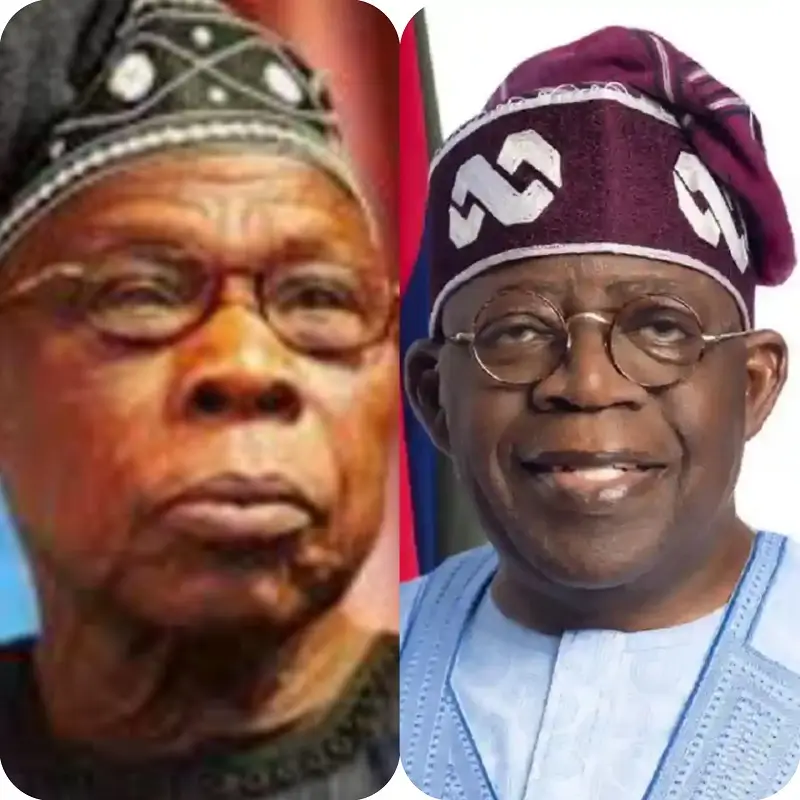
Presidency replies former President, Olusegun Obasanjo, for continuously blaming successive administration after he left office in 2007. Highlighted the effect of his regime on Nigerians.
Former President Olusegun Obasanjo once again took center stage to share his views on leadership and governance in Nigeria, casting blame on those who succeeded him for the nation’s ongoing challenges.
This pattern of publicly criticizing successive administrations has unfortunately become a hallmark of Obasanjo’s commentary, diverting attention from the potential for constructive dialogue that is expected of a seasoned elder statesman.
At the Chinua Achebe Leadership Forum at Yale, Obasanjo referred to Nigeria as a failing nation and leveled critiques at both President Muhammadu Buhari, whom he termed ‘Baba Go Slow,’ and President Bola Tinubu, whom he labeled ‘Emilokan.’ The choice of this platform, named after the late Chinua Achebe—a revered moral and cultural figure who openly criticized Obasanjo during his lifetime—highlights the irony of his assertions on governance and morality. Achebe famously declined a national honor from Obasanjo’s administration in 2004, citing widespread corruption and abuse of power during his tenure.
Under Obasanjo’s leadership, serious constitutional violations occurred, including the controversial impeachment of governors from his party. These actions reflect a disregard for the democratic process that undermines his credibility as a voice for ethical governance today.
While Obasanjo has branded himself an economic architect of the nation, a closer look at his administration reveals the persistence of critical issues he now highlights. He recently acknowledged that his focus on gas development was lacking, an aspect that President Tinubu’s government is now prioritizing. Despite benefiting from rising crude oil prices, Obasanjo’s tenure saw little investment in resolving Nigeria’s infrastructure dilemmas or addressing the educational system.
Moreover, significant investments in national security were notably absent during his administration. The military infrastructure suffered as a result, which subsequent administrations have had to confront. President Buhari transformed the Armed Forces into a formidable fighting force, a legacy that President Tinubu continues.
The challenges posed by insecurity in Nigeria have deep roots in policies from the Obasanjo era, where issues such as militancy and kidnappings initially took hold. On matters of integrity, Obasanjo’s record raises questions. Incidents involving financial misconduct, such as the PTDF scandal, and the controversial handling of energy investments, have left a mark on his legacy.
If Obasanjo had addressed the very issues he now critiqued during his presidency, the burdens facing leaders today might have been considerably lighter. As the Tinubu administration works diligently to navigate the complex economic landscape, it would be beneficial for Obasanjo to step back from self-righteous commentary and instead reflect on the missed opportunities of his own leadership, both during his time as a military ruler and as a civilian president.
Leave a Reply