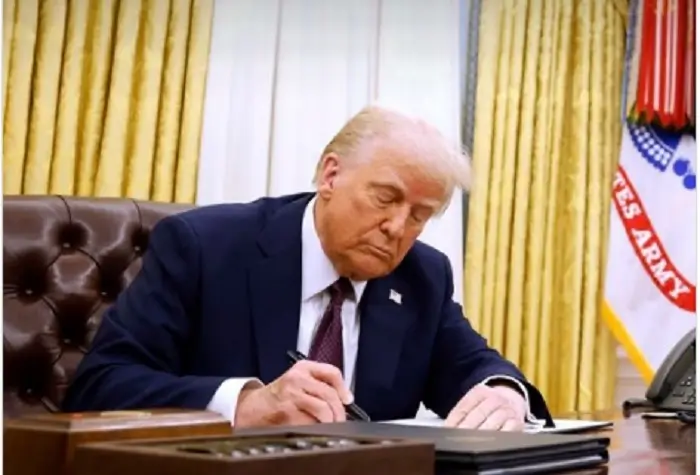
The administration of U.S. President Donald Trump is introducing a sharp increase in visa costs as part of its ongoing immigration crackdown. Beginning Friday, September 19, 2025, a new executive order will impose a $100,000 fee on all H-1B visa applications, according to a White House official.
The H-1B visa program, which admits hundreds of thousands of skilled foreign workers annually, has long been a target of the Trump administration, which argues that the system allows companies to undercut U.S. wages by hiring lower-paid employees from abroad.
Under the new order, applicants will be required to pay the fee as a condition for entry into the program. The policy is widely expected to limit applications to wealthier individuals and large corporations, potentially excluding smaller firms and less financially secure applicants.
Impact on Tech Industry
The change poses a particular challenge for the technology sector, which depends heavily on skilled workers from India and China. Government data shows that India accounted for 71% of H-1B visa beneficiaries in 2024, while China accounted for nearly 12%.
Major companies such as Amazon, Microsoft, and Meta collectively secure tens of thousands of H-1B visas each year. While these firms may absorb the additional costs, experts warn that startups and smaller tech firms could be severely affected.
“This creates a disincentive to attract the world’s smartest talent to the U.S.,” said Deedy Das, partner at Menlo Ventures, in a post on X (formerly Twitter). “If the U.S. ceases to attract the best talent, it drastically reduces its ability to innovate and grow the economy.”
Wider Workforce Concerns
Although roughly two-thirds of H-1B jobs are in computer-related fields, the program also supports employers in engineering, education, and healthcare. Analysts warn that the steep fee could ripple through multiple industries, further tightening the labor market in specialized fields.
The policy underscores the Trump administration’s broader stance on immigration – restricting entry while pushing for higher costs and stricter compliance. Critics argue it may weaken America’s long-standing position as a top destination for global talent.
Leave a Reply