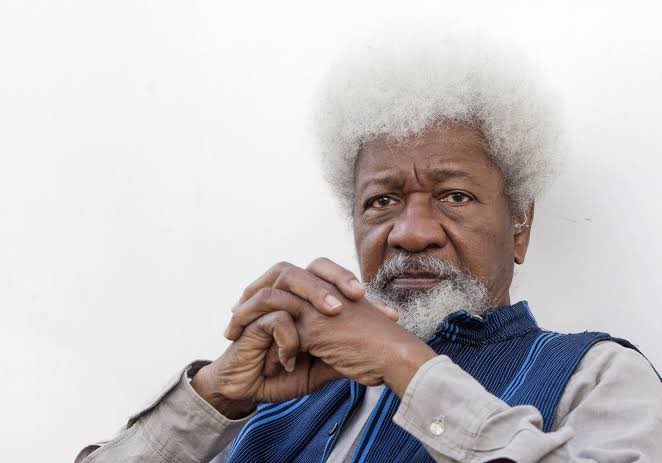
The United States government has permanently revoked the visa of Nigerian Nobel Laureate, Professor Wole Soyinka, in a move that has sparked national and international attention. The decision, reportedly communicated through the U.S. Consulate in Lagos, cited the discovery of “additional information” that emerged after the visa was issued. The revocation applies to Soyinka’s non-immigrant B1/B2 visa, which had been issued in April 2024.
Professor Soyinka confirmed the development during a press briefing in Lagos, where he read aloud the letter from the U.S. authorities. While the reason behind the action remains unclear, the letter referenced the U.S. immigration regulation that allows the government to revoke a visa at any time if new information surfaces. The revocation is said to be permanent, effectively barring the literary icon from entering the United States unless new authorization is granted.
Reacting to the decision, Soyinka expressed surprise but maintained that he had no knowledge of any wrongdoing that could have warranted the revocation. He described the situation as unexpected but not entirely surprising, noting that he has long been a vocal critic of political oppression and injustice around the world. He emphasized that the move would not affect his global advocacy for human rights and democracy, adding that he holds no personal animosity toward the American people.
The incident has stirred conversations across diplomatic and cultural circles, with many observers viewing it as an unusual step against a respected global figure. Some have speculated that the decision could be politically motivated, possibly linked to Soyinka’s long history of outspoken criticism of government policies, including his disapproval of divisive rhetoric in past U.S. administrations.
Soyinka’s relationship with the United States has had its complexities. In 2016, following Donald Trump’s election, he publicly tore up his U.S. Green Card in protest, citing moral and political reasons. Since then, he has traveled to the U.S. on short-term visas for academic and literary engagements. The latest revocation, however, appears to close that chapter for now, marking a significant diplomatic episode involving one of Africa’s most distinguished voices.
The development raises broader questions about the balance between immigration policy and freedom of expression. Many are calling for greater transparency from U.S. authorities on the reasons behind the decision, while others see it as a reminder of the unpredictability of global politics. Regardless of the controversy, Soyinka remains firm in his resolve to continue speaking truth to power, reaffirming his role as a fearless advocate for justice and human dignity.
Leave a Reply