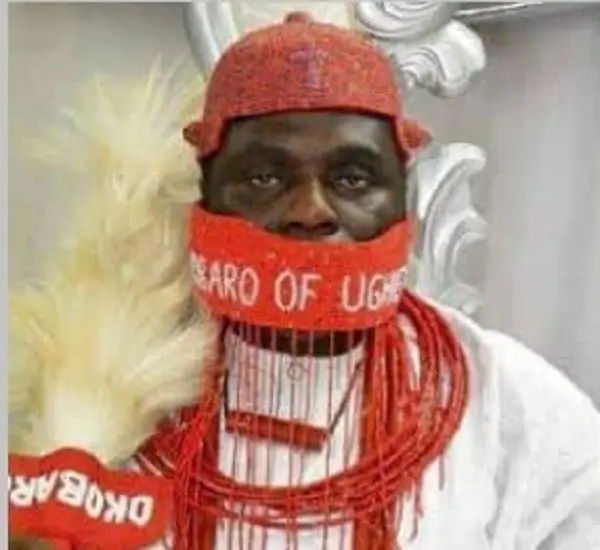
Ughievwen is one of the 24 clans of the Urhobo people of Delta State, Nigeria. It is regarded as one of the major Urhobo clans and is located in Ughelli South Local Government Area. The traditional ruler of the kingdom is the Ovie, who is commonly addressed as the Okobaro of Ughievwen Kingdom. The title represents the traditional authority and cultural leadership of the Ughievwen people.
Ughievwen occupies about 275 square kilometres and is strategically located within the Ughelli South area. The kingdom is bounded by the Forcados River to the south, Olomu Clan to the east, Udu Clan to the west, and Agbarho and Ughelli clans to the north. Its geographical position and extensive territory have contributed to its importance among the traditional communities of Delta State.
Otughievwen serves as the headquarters of the kingdom. It is also regarded as the centre of Ughievwen traditional administration. Following the creation of new local government areas in 1991, Otughievwen became the headquarters of Ughelli South Local Government Area. The local government comprises Arhavwarien, Eghwu, Ephronto, Okparabe, Olomu and Ughievwen clans.
Origin of the Traditional Throne
According to the traditional history of the people, Ughievwen was a man who left the Benin Kingdom around 1370 AD. He had several children, including female children whose names were not preserved in historical records because of marriages into other families. Four sons, however, were documented, and their descendants became the four major sub-clans or ruling houses of Ughievwen.
The four sub-clans are Orhohwe, Owahwa, Ukpedi and Uphurie. They collectively constitute the traditional structure of Ughievwen Kingdom. The Okobaro occupies the highest traditional position, while the four sub-clans remain important components of the kingdom’s ancestral and cultural organisation.
The people of the kingdom identify themselves as Ughievwen and speak the Ughievwen dialect of the Urhobo language. In some government records, the area has historically been identified as Jeremi, while some Urhobo speakers refer to the people as Ujevwe. The name Ughievwen remains the principal traditional identity of the people and their kingdom.
Four Sub-Clans of Ughievwen
The Orhohwe Sub-Clan comprises Ighwreekan, Edjophe and Oto-Edo. The Owahwa Sub-Clan includes Otor-Owahwa, Egbo-Ide, Esaba, Ophorigbala, Otutuama, Ighwreogun, Okwemor, Otegbo and Otitiri. These communities form important parts of the traditional territory under the wider Ughievwen Kingdom.
The Ukpedi Sub-Clan comprises Otughievwen, Eyara, Imode, Agboghwiame, Erhunwaren, Agbaghare, Ayagha, Oginibo, Okwagbe Water-Side, Okwagbe Inland and Ighwreoku. Otughievwen, being the headquarters of the kingdom, has a particularly significant position in the traditional and administrative history of Ughievwen.
The Uphurie Sub-Clan comprises Ekprokpe, Ekakpamre, Urhiephron, Ekrejegbe, Ughevwughe, Otokutu, Egbo-Uphurie, Ighwrekreka and Arhagba. Together with Orhohwe, Owahwa and Ukpedi, Uphurie completes the four major ancestral divisions of Ughievwen Kingdom.
The Okobaro of Ughievwen Kingdom therefore stands at the centre of a traditional institution built upon the history of the four ancestral sub-clans. The Ovie’s position represents the continuity of Ughievwen’s traditional heritage, customs and identity. The throne remains a symbol of unity among the numerous communities that make up the kingdom.
The strength of the Okobaro’s traditional institution is closely connected to the history and unity of the four sub-clans. Orhohwe, Owahwa, Ukpedi and Uphurie each preserve their ancestral identities while belonging to the wider Ughievwen Kingdom. The Okobaro remains the traditional figure through whom the collective identity of the kingdom is represented.
Ughievwen’s history, extensive territory and numerous communities have made the kingdom an important part of Urhobo traditional heritage. From the ancestral story of Ughievwen to the four sub-clans and their communities, the institution of the Okobaro provides a link between the past and the present. The continued preservation of the throne, customs, language and communal heritage remains central to the identity of Ughievwen Kingdom.
Leave a Reply