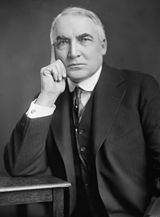
Warren G. Harding was the 29th President of the United States of America, serving from 1921 until his death in 1923. He entered the White House after a decisive election victory and promised a return to normalcy after the First World War. His presidency was marked by pro-business policies, lower government spending, and damaging scandals. Yet his short time as US President also included important appointments, diplomatic efforts, and economic measures that influenced the United States of America.
Warren G. Harding: Family & Education
Warren G. Harding was born on 2 November 1865 in Blooming Grove, Ohio. He was one of eight children of George Tryon Harding Sr. and Phoebe Elizabeth Dickerson Harding. His father was a physician who later became a farmer and newspaper publisher. Harding attended Ohio Central College in Iberia, Ohio, graduating in 1882. His education encouraged his interest in journalism, public speaking, and public affairs. He later built a career through the newspaper business and Ohio Republican politics.
Administration
As US President, Harding promoted what he called a return to normalcy. His administration favoured lower taxes, reduced federal spending, and a lighter regulatory approach to business. The White House supported the Budget and Accounting Act of 1921. It created a formal federal budget system and strengthened oversight of public finances. He also signed the Fordney-McCumber Tariff, raising duties on many imports. The White House backed immigration restrictions, including the Emergency Quota Act of 1921. These measures reflected a desire for stability after war and economic disruption. In the United States of America, his economic programme was welcomed by business interests.
Career
Before entering national office, Harding worked as a newspaper publisher, businessman, and Ohio politician. He purchased the Marion Daily Star in 1884 and developed it into a local newspaper. His political career expanded through service in the Ohio Senate and later as lieutenant governor. He was elected to the United States Senate in 1914. Harding gained national prominence at the 1920 Republican National Convention, where party leaders selected him as their presidential nominee. His campaign emphasised normalcy, prosperity, and a rejection of the internationalist politics associated with the previous administration. As US President, his political experience shaped a cautious governing style.
Major Challenges
The presidency faced serious political and ethical problems. Some officials appointed by Harding became involved in corruption scandals. The most notorious was the Teapot Dome scandal, in which government oil reserves were secretly leased to private companies in return for personal benefits. The scandal became a major symbol of misconduct in government. The White House was criticised over appointments based heavily on political loyalty. Although he was not proven to have personally profited from the scandals, the actions of members of his administration damaged public confidence. The US President increasingly recognised that some appointments had created difficulties. His administration also faced debates over immigration, labour disputes, and the country’s role in international affairs.
Successor in Office
Harding died unexpectedly in San Francisco on 2 August 1923 while returning from a western tour. His death created an immediate succession. Vice-President Calvin Coolidge was at his family home in Vermont when news arrived. Coolidge took the presidential oath during the early hours of 3 August 1923, administered by his father, John Calvin Coolidge Sr., a Vermont justice of the peace. He then became US President and succeeded Harding in office.
The transition was completed quickly and peacefully. The presidential office passed from Harding to Coolidge without a constitutional crisis. In the United States of America, the succession demonstrated the importance of clear constitutional procedures in the United States of America. The legacy of Warren G. Harding therefore remains a study in contrasts. His administration introduced measures that strengthened budgeting and reflected a post-war demand for stability, but scandals later overshadowed many achievements. The record of Warren G. Harding shows how presidential appointments, White House management, and public trust can determine how an administration is remembered.
Leave a Reply