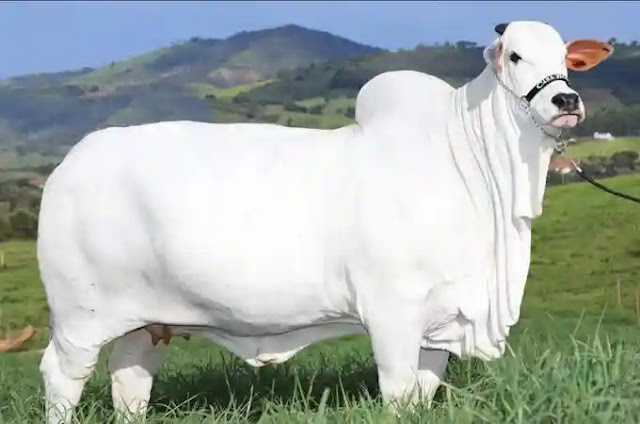
The world’s most expensive cow has been sold for a jaw-dropping N6.7 billion (around $4.8 million). This record-breaking sale in Brazil raises eyebrows not only for the amount but also for how the global market for animals is changing. Animals are becoming more than just a source of food and labor – they are increasingly seen as valuable assets. So, how did a cow become worth such an astonishing sum, and what does this mean for the future of animal trading?
The Sale: A Milestone in Animal Trading
The cow in question, a purebred named “Friesian”, was sold at an auction in Brazil, setting a new benchmark for the agricultural and livestock sectors. With a price tag of $4.8 million, this record-breaking sale illustrates how certain types of livestock are being valued as high-end assets, much like rare works of art or luxury items. In fact, this is not the first time we’ve seen sky-high prices for livestock; however, this sale far exceeds previous records, signaling a shift in the livestock market.
Why Such a High Price?
So, what made this cow worth $4.8 million? Several factors contribute to the value of high-end livestock, including genetics, health, breeding potential, and rarity. This particular cow had impressive genetic traits that could lead to higher-quality milk and better reproduction rates, making her an extremely valuable asset to elite breeders. The cow’s lineage and potential to produce offspring that could carry forward these high-value traits were a key part of the transaction.
The Changing Face of Animal Trade
This sale is part of a larger trend where animals, especially in agriculture, are becoming more valuable. In countries like Brazil, where agriculture plays a critical role in the economy, livestock is increasingly seen as a valuable financial asset. Just like rare cars or luxury homes, some animals can bring in big profits based on their potential to improve agricultural yields, produce rare resources, or enhance the overall quality of farming operations.
Moreover, advances in genetics and biotechnology have made it possible to “improve” livestock in ways that were previously unthinkable. Livestock with better milk production, disease resistance, and overall quality can fetch a hefty price tag. The sale of the world’s most expensive cow is just one example of how technology and innovation are transforming traditional agricultural industries.
The Impact of Such Sales
While such sales are impressive, they also raise important questions about the ethics and sustainability of the growing commodification of animals. As the market for high-value livestock increases, there is the risk that animal welfare could take a backseat to profit motives. Additionally, this trend could widen the gap between small farmers and large agribusinesses, as only the wealthiest players can afford such pricey livestock.
However, the sale of expensive cows like the one in Brazil also highlights the potential for economic growth in rural and agricultural areas. For farmers who can invest in top-tier livestock, there may be significant financial rewards, allowing them to expand their operations and increase production.
The sale of the world’s most expensive cow is more than just a headline-grabbing story; it represents the changing dynamics of agriculture and animal trade. Livestock is becoming a more valuable and specialized asset, pushing the boundaries of what we thought possible in animal breeding and agriculture.
Leave a Reply