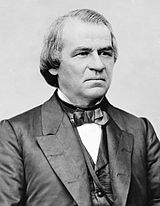
Andrew Johnson remains a significant and controversial figure in American political history. As US President, Andrew Johnson was confronted with the difficult task of leading the United States of America after the assassination of Abraham Lincoln. His presidency was dominated by Reconstruction, political disputes and debates over the future of formerly enslaved people. His family background, limited formal education, achievements and major challenges continue to shape assessments of his presidency.
Andrew Johnson and Family
Andrew Johnson was born on 29 December 1808 in Raleigh, North Carolina. He came from a poor family and experienced hardship during his childhood. His father, Jacob Johnson, worked as a porter and died when Andrew was young. His mother, Mary McDonough, worked as a laundress to support the family.
In 1827, Johnson married Eliza McCardle. The couple had five children, although only four survived to adulthood. Family life was important to Johnson, particularly as his political career developed.
Education and Early Life
Andrew Johnson received very little formal schooling. His mother arranged for him to be apprenticed to a tailor when he was still young. He later taught himself to read and write with assistance from his wife.
His limited education did not prevent him from entering public life. He developed strong skills in political debate and became known for his direct speaking style.
The United States of America was undergoing major political and economic changes during his rise. Johnson’s experience as a working-class man helped shape his political identity and appeal.
Parents and Children
Johnson’s upbringing was marked by poverty and the early death of his father. His mother played an important role in his development, while his wife became an important source of support.
His children lived through a period of major political transformation. The family remained connected to Johnson’s public career as he moved from local politics to national office.
As US President, his family background was sometimes contrasted with the privileged origins of many American political leaders. His rise from poverty to the presidency was therefore regarded as remarkable.
Achievements in Public Service
Before reaching the White House, Johnson served in several political positions. He was elected to Congress and later became governor of Tennessee. He also served as a United States senator.
His major achievements included:
- Maintaining loyalty to the Union during the American Civil War.
- Becoming military governor of Tennessee.
- Serving as vice-president under Abraham Lincoln.
- Assuming the presidency in 1865.
- Supporting the restoration of state governments after the Civil War.
As US President, Johnson supported a rapid restoration of the former Confederate states. He also opposed several congressional Reconstruction measures, creating serious conflict with Republican lawmakers.
Challenges and Impeachment
Andrew Johnson faced enormous challenges after taking office. The central issue was how the United States of America would be rebuilt after the Civil War and how the rights of formerly enslaved people would be protected.
Congressional Republicans demanded stronger federal protection for African Americans. Johnson, however, resisted several measures and frequently clashed with Congress.
His opposition to the Tenure of Office Act contributed to his impeachment in 1868. The Senate ultimately acquitted him by one vote, allowing him to remain in office until the end of his term.
Andrew Johnson’s presidency was therefore defined by political confrontation. The United States of America was being reconstructed, while competing visions of national unity and civil rights were being debated.
The legacy of Andrew Johnson remains closely associated with the difficult Reconstruction era. His rise from poverty demonstrated remarkable political advancement, but his presidency was weakened by conflict with Congress and disagreements over racial policy. As US President, Andrew Johnson occupied one of the most challenging positions in the United States of America at a decisive moment. His family story, education, achievements and political struggles continue to make Andrew Johnson an important figure in understanding America’s post-Civil War transformation.
Leave a Reply