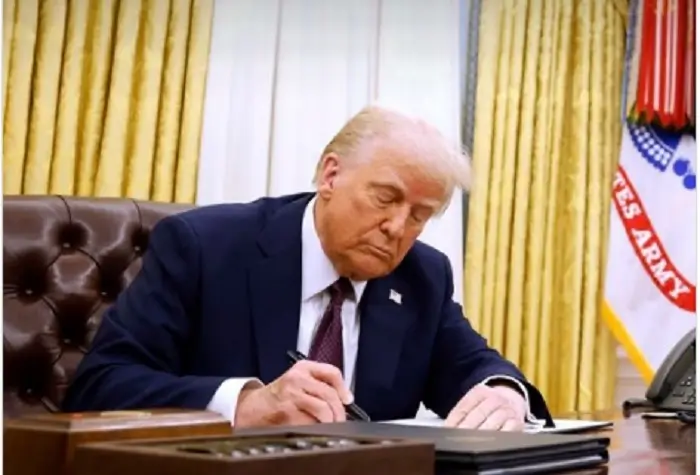
President Donald Trump imposed sweeping tariffs on April 2, 2025 branded as “Liberation Day”. It is a baseline 10% on most imports, with higher rates of up to 50% on selected countries. The administration framed these measures as essential to protecting U.S. industries, enhancing sovereignty, and countering unfair trade practices.
However, the tariffs have been heavily contested in U.S. courts. Both the Court of International Trade and the U.S. Court of Appeals for the Federal Circuit have ruled them unlawful, finding that the president exceeded his authority under the International Emergency Economic Powers Act (IEEPA).The cases are now headed to the Supreme Court, where a final judgment will determine the legality of these measures.
Possible Consequences of a Supreme Court Reversal
1. Invalidation of the Tariffs
A ruling against the administration would immediately strike down the “Liberation Day” tariffs. This would undercut one of the most sweeping elements of President Trump’s trade policy and signal that such measures cannot be enacted unilaterally without congressional authorization.
2. Massive Refund Liabilities
The U.S. Treasury could be compelled to refund importers for tariffs already collected. Estimates suggest refunds could amount to tens of billions of dollars, representing nearly half of total revenues from the tariffs. While importers would benefit, consumers who bore higher costs would not be eligible for refunds – raising questions of fairness and implementation.
3. Economic and Trade Policy Disruption
An adverse ruling could destabilize U.S. trade policy. Businesses that adjusted supply chains and investment strategies around the tariffs would face uncertainty, complicating long-term planning. Moreover, trading partners may demand clarity on the U.S.’s commitment to global trade norms.
4. Limits on Executive Authority
Perhaps the most far-reaching impact would be the precedent set on presidential powers. A Supreme Court ruling against the tariffs would sharply limit the scope of emergency powers under IEEPA, reinforcing the principle that tariff impositions are primarily within Congress’s constitutional remit.
5. Alternative Legal Pathways
Even if the “Liberation Day” tariffs are struck down, the administration could still pursue tariffs under other existing statutes – such as Section 232 (national security grounds) or Section 301 (addressing unfair trade practices). These avenues, however, involve more procedural hurdles and are less sweeping than the current measures.
If the Supreme Court rules against the “Liberation Day” tariffs, the decision would reshape U.S. trade policy, impose significant fiscal costs on the Treasury, and reaffirm constitutional limits on executive authority. While President Trump may seek alternative legal grounds for tariff action, the judgment would represent a defining moment in balancing trade enforcement with the rule of law.
Leave a Reply